
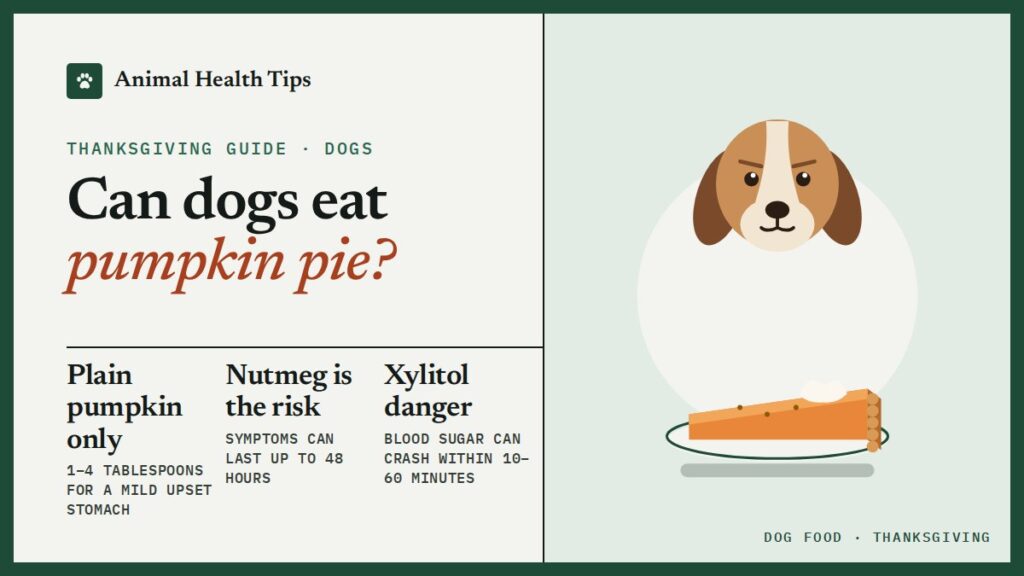
Thanksgiving in the United States falls on 26 November this year, and pumpkin pie is the dessert that ends almost every meal. If your dog is watching you eat it, it is natural to wonder whether they can have a slice. The short answer is no, but the reason is not the pumpkin. Plain pumpkin is a healthy food for dogs. The pie is a different dish, and what is added to it is the problem. This guide follows the AKC, the FDA, Cornell, VCA Animal Hospitals and PDSA.
In this guide8 sections
- Can dogs eat pumpkin pie?
- What is in pumpkin pie that makes it unsafe?
- Nutmeg and myristicin: the spice to watch
- Xylitol: the hidden danger in sugar-free pie
- What plain pumpkin can do for your dog
- What to do if your dog eats pumpkin pie
- Keeping the dessert table safe at Thanksgiving
- Frequently asked questions
Call your vet now if your dog has eaten pumpkin pie
- Note how much was eaten and when, and whether the pie was sugar-free.
- Do not wait for symptoms: xylitol can crash a dog’s blood sugar within 10 to 60 minutes.
- Never try to make your dog vomit at home. Only a vet should decide that.
- UK: Animal PoisonLine, 01202 509000 — open 24 hours, run by the Veterinary Poisons Information Service; a fee applies.
- US: ASPCA Animal Poison Control, (888) 426-4435 — open 24 hours; a consultation fee applies.
Can dogs eat pumpkin pie?
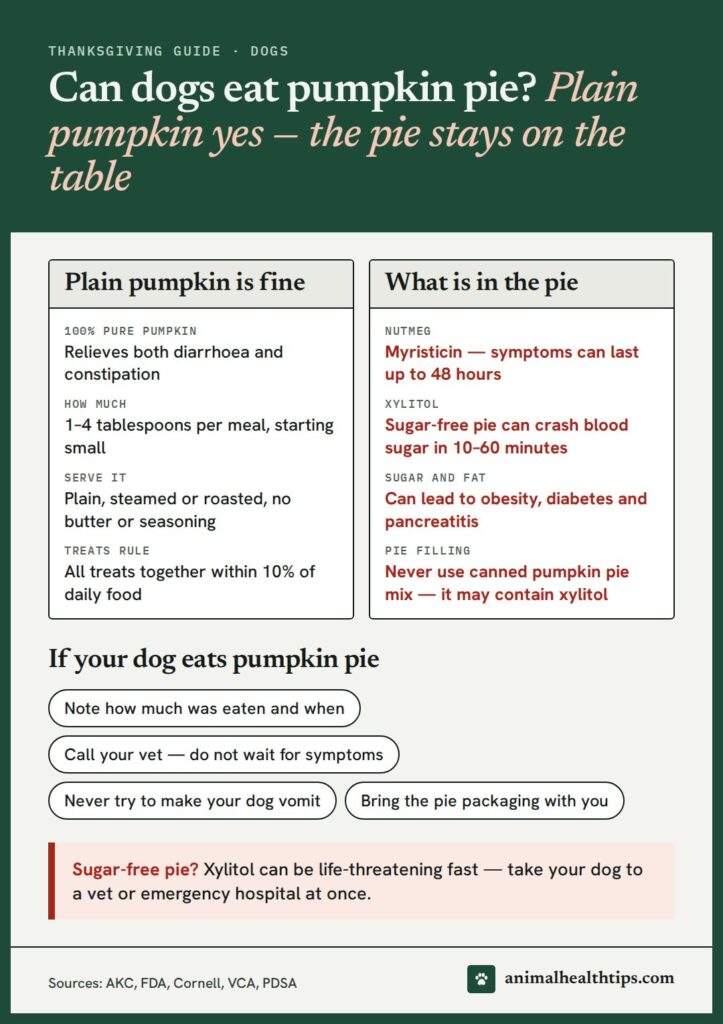
No. The AKC says pure pumpkin is a healthy food for dogs and that it works to relieve both diarrhoea and constipation, but that you should always choose 100% pumpkin puree, or roast a pumpkin and feed the peeled flesh — never pumpkin pie filling. The pie is pumpkin plus sugar, fat, spices and dairy, and two of those additions are genuinely dangerous. The AKC warns never to use canned pumpkin pie mix, because it may contain xylitol, which is toxic to dogs, and adds that canned pumpkin with added salt, spices, sugar or other additives can irritate a dog’s stomach.
What is in pumpkin pie that makes it unsafe?
Four things in the pie carry the risk, and each one is separate. Nutmeg contains myristicin, which is toxic to dogs. Sugar-free pie may contain xylitol, which can be life-threatening even in a small amount. The sugar and fat in the pastry and filling can upset a dog’s stomach and trigger pancreatitis. And the canned pie filling itself is not the same as plain pumpkin: the AKC says to use only plain, unsweetened pumpkin, not pumpkin pie filling, and quotes its chief veterinarian, Dr Jerry Klein, saying that pumpkin pie filling contains xylitol, a toxic artificial sweetener to dogs.
| On the table | What’s in it | Safe for a dog? |
|---|---|---|
| Plain pumpkin puree | 100% pumpkin, nothing added | Yes, 1–4 tablespoons per meal |
| Pumpkin pie | Nutmeg, sugar, fat, dairy, pastry | No — nutmeg and fat are the problem |
| Canned pumpkin pie mix | Sweetened and pre-spiced filling | No — it may contain xylitol |
| Sugar-free pumpkin pie | May contain xylitol (birch sugar) | No — xylitol can be fatal |
Nutmeg and myristicin: the spice to watch
Nutmeg is the pie spice to watch. The AKC says nutmeg is not safe for dogs because it contains myristicin, which can cause high blood pressure, hallucinations, increased heart rate, abdominal pain and even seizures, and advises keeping dogs away from nutmeg altogether. The warning signs are disorientation, dry mouth, vomiting, tremors and lack of coordination, and if a dog shows them, you should contact a veterinarian right away. The symptoms can last up to 48 hours.
There is one piece of reassurance in the AKC’s guidance: it would take a large amount of nutmeg to cause problems, and the small amount used in baked goods is generally safe. That does not make the pie safe to share, because the pie has other problems too, and the AKC’s advice is to keep a dog away from nutmeg altogether. If a dog eats nutmeg, the AKC says this is no time for home remedies unless a vet or Poison Control specifically advises it, and that you should tell the vet how much nutmeg the dog ate.
The other spices in the pie are milder. Cinnamon is not toxic to dogs, though cinnamon essential oil can be, and it takes more than one teaspoon of powder to cause problems for most pets. A little ginger is safe for dogs and soothes nausea. But neither makes the pie safe, because the pie is still rich, sweet and fatty.
Xylitol: the hidden danger in sugar-free pie
Xylitol is the most urgent risk in the pie, and it hides in the sugar-free version. The FDA says xylitol is used in baked goods such as cakes, muffins and pies, and in sugar-free desserts, and that it may also be listed as birch sugar or wood sugar. In dogs it is absorbed quickly and can trigger a potent release of insulin, causing a rapid and profound drop in blood sugar within 10 to 60 minutes, which can quickly be life-threatening if untreated. PDSA gives the same warning in plain terms: never give pets sweets, because they may include xylitol, and if a pet may have eaten xylitol, do not wait for symptoms.
Cornell puts a number on the insulin surge: it is three to seven times the amount normally needed to metabolise regular sugar, and hypoglycaemia develops within 30 to 60 minutes. Larger ingestions can damage the liver, which can be more serious or even fatal. The signs are lethargy, disorientation, incoordination and stumbling, tremors, vomiting, seizures and coma. Dogs may be hospitalised for at least 12 to 24 hours, and liver enzymes are often rechecked three days after exposure.
The FDA’s advice is to take a dog that may have eaten xylitol to a vet or emergency animal hospital immediately, and Cornell adds to bring the packaging so the vet can estimate how much was eaten.
What plain pumpkin can do for your dog
Plain pumpkin is worth keeping in the cupboard, and the pie is not the way to serve it. The AKC says plain canned pumpkin is the healthiest choice for a dog, because canned pumpkin contains a higher concentration of fibre and nutrients than fresh pumpkin, which has higher water content. Pumpkin contains vitamins A, E and C, plus potassium and iron.
To help with diarrhoea or mild constipation, the AKC says to add one to four tablespoons of pumpkin or pumpkin powder to the dog’s meal, starting with smaller quantities, and to ask a vet about the exact amount for the dog’s size. Pumpkin is best for mild, non-serious diarrhoea and is not a substitute for veterinary care in severe cases. Plain pumpkin is also a common home treatment for dogs with mild stomach upsets — but if the upset persists, or the dog has eaten something it should not have, consult a veterinarian immediately.
- Choose 100% pumpkin puree. Check the can: the label should list pumpkin alone, not pumpkin pie filling.
- Serve it plain. Steamed or roasted, with the seeds, skin and rinds removed, and no butter. Avoid squash seasoned with onion, salt or garlic salt, which are toxic for dogs.
- Keep it within the treats rule. PDSA says treats should make up no more than 10% of a dog’s daily food intake, and to reduce the dog’s food to account for treats.
- Do not use it as medicine. Pumpkin helps mild upsets only. Vomiting, diarrhoea that does not settle, or a dog that has eaten something harmful needs a vet, not pumpkin.
The same plain-only rule applies to the rest of the table. Our guides to whether dogs can eat plain pumpkin and whether dogs can eat gravy follow the same pattern, and our guide to whether dogs can eat stuffing explains where onion and garlic hide in the meal.
What to do if your dog eats pumpkin pie
- Work out what was in it: whether the pie was sugar-free, how much your dog ate, and when.
- Call your vet promptly. Do not wait for symptoms — xylitol can crash blood sugar within 10 to 60 minutes, and serious effects may not show for 12 to 24 hours.
- Bring the packaging. The vet needs it to estimate how much xylitol or nutmeg your dog may have eaten.
- Never try to make your dog vomit at home. Only a vet should decide that.
- Watch for warning signs: vomiting, weakness, staggering, collapse and seizures point to xylitol; disorientation, tremors and lack of coordination point to nutmeg; vomiting, lethargy and abdominal pain can point to pancreatitis.
Keeping the dessert table safe at Thanksgiving
Thanksgiving dessert is a risky time for dogs in general, and the pie is only one of the dangers on the table. The AKC lists grapes and raisins as highly toxic to dogs, no matter their breed, sex or age, and says they can lead to acute sudden kidney failure — so mince pies and fruit cakes are out too. Chocolate is toxic as well, and PDSA says that if a dog has eaten something harmful, you should contact a vet right away.
- Serve your dog’s plate first, before the desserts come out. A spoonful of plain pumpkin puree is the safe version of the pie.
- Tell your guests. Children and visitors often share from their own plates, so make it clear that nothing from a plate is for the dog.
- Clear up as you go. Put the pie dish and leftovers away promptly, so a curious dog cannot help themselves later.
- Keep your dog out of the kitchen while the meal is being served and cleared, when spills and dropped food are most likely.
Key takeaways
- Plain pumpkin is safe and healthy for dogs; pumpkin pie is not.
- Nutmeg contains myristicin, which is toxic to dogs, and symptoms can last up to 48 hours.
- Sugar-free pie may contain xylitol, which can crash a dog’s blood sugar within 10 to 60 minutes.
- If your dog eats pie, call your vet at once, bring the packaging, and never try to make your dog vomit at home.
Frequently asked questions
Can dogs eat pumpkin pie filling?
No. The AKC says to use only plain, unsweetened pumpkin, not pumpkin pie filling, and warns never to use canned pumpkin pie mix because it may contain xylitol, which is toxic to dogs. Canned pumpkin with added salt, spices, sugar or other additives can also irritate a dog’s stomach.
Is nutmeg toxic to dogs?
Yes. Nutmeg contains myristicin, which can cause high blood pressure, hallucinations, increased heart rate, abdominal pain and seizures, and symptoms can last up to 48 hours. A large amount is needed to cause problems, but the AKC advises keeping dogs away from nutmeg altogether.
Can dogs eat plain pumpkin?
Yes. The AKC says pure pumpkin is a healthy food for dogs that relieves both diarrhoea and constipation. Serve 100% pumpkin puree, or roasted peeled pumpkin flesh, at one to four tablespoons per meal, starting small. Ask your vet about the exact amount for your dog’s size.
What is xylitol and why is it dangerous?
Xylitol is a sweetener used in baked goods and sugar-free desserts, sometimes listed as birch sugar or wood sugar. In dogs it triggers a potent release of insulin, causing a rapid drop in blood sugar within 10 to 60 minutes. Larger amounts can damage the liver, and the effects can be fatal.
My dog ate a slice of pumpkin pie. What should I do?
Note how much was eaten, when, and whether the pie was sugar-free, then call your vet promptly and do not wait for symptoms. Bring the pie packaging so the vet can estimate how much was eaten. Never try to make your dog vomit at home.
Can dogs eat other Thanksgiving desserts?
No. Chocolate and grapes are toxic to dogs, and the AKC says grapes and raisins can lead to acute sudden kidney failure. Human baked goods are also high in fat and sugar, which can lead to obesity, diabetes and pancreatitis.
Sources
- American Kennel Club — Fruits & Vegetables Dogs Can and Can’t Eat
- American Kennel Club — Can Pumpkin Help With Dog Diarrhea?
- American Kennel Club — Can Dogs Eat Cinnamon?
- American Kennel Club — Can Dogs Eat Squash?
- US Food and Drug Administration — Paws Off Xylitol; It’s Dangerous for Dogs
- Cornell University Riney Canine Health Center — Xylitol Toxicities
- VCA Animal Hospitals — Pancreatitis in Dogs
- PDSA — Spooky Pet Safety Tips
This guide is general information, not a diagnosis. If you are worried about your pet, contact your vet.
1 comment