
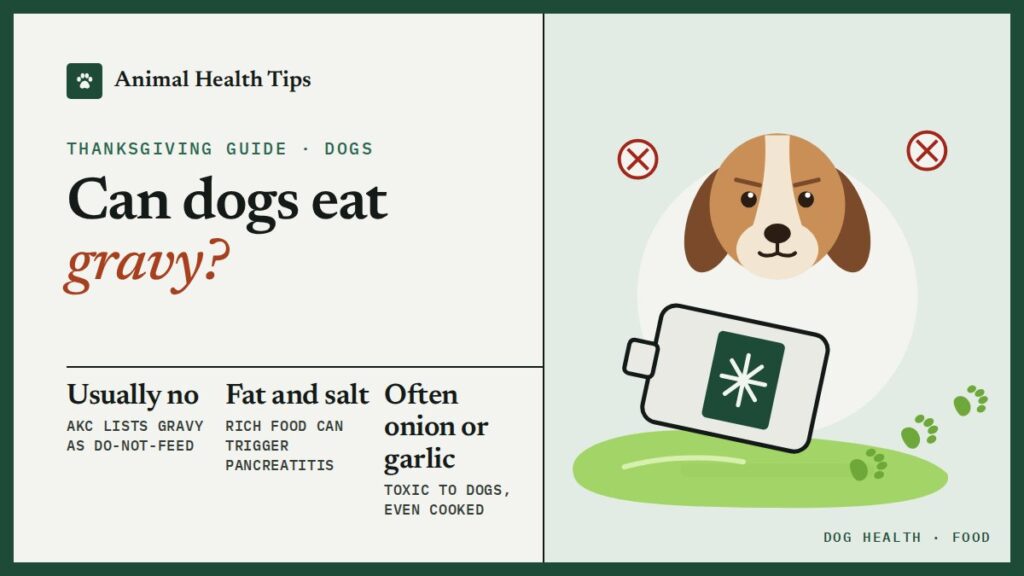
Thanksgiving in the United States falls on 26 November this year, and the gravy jug sits in the middle of the table for most of the meal. It looks like the kindest thing you could share with a dog: warm and meaty, poured over food they already love. The problem is what gravy is made of. It is mostly fat and salt, it is often made with onion, garlic or bouillon, and the American Kennel Club lists it among the foods not to feed a dog at Thanksgiving. This guide follows the AKC, the ASPCA, PDSA, the Merck Veterinary Manual and VCA Animal Hospitals.
In this guide6 sections
Call your vet now if your dog has eaten gravy that contained onion or garlic
- Do not wait for symptoms: onion and garlic damage can take three to five days to show.
- Note how much was eaten and what was in the gravy, including any bouillon or stock cubes.
- Never try to make your dog vomit at home. Only a vet should decide that.
- UK: Animal PoisonLine, 01202 509000 — open 24 hours, run by the Veterinary Poisons Information Service; a fee applies.
- US: ASPCA Animal Poison Control, (888) 426-4435 — open 24 hours; a consultation fee applies.
Why is gravy a problem for dogs?
Gravy is made from meat drippings, so it concentrates the fat from the roast. The AKC’s Thanksgiving guide lists gravy in its do-not-feed list, alongside turkey bones and skin, stuffing, casseroles, onions, scallions and garlic, and fatty or heavily seasoned foods. Turkey skin, it adds, is high in fat and often coated with butter or oil, which increases the risk of pancreatitis.
Gravy carries three separate risks. The first is fat: the ASPCA warns that feeding foods high in fat to dogs can lead to pancreatitis. The second is salt: bouillon cubes used for making stocks and gravy contain high amounts of sodium, which can lead to stomach problems and even seizures. The third is onion and garlic, which are common in Thanksgiving dishes and can be toxic to pets.
Onion and garlic are the quietest of the three, because the damage is not always quick. The Merck Veterinary Manual says dogs and cats have been affected after eating raw, cooked, dehydrated or granulated onion and garlic, and that signs of acute haemolytic anaemia can develop several days after eating them, including weakness, pale gums, yellowing and collapse. Garlic is three to five times more toxic than onion, and concentrated forms such as flakes and powders are the most common cause.
What is pancreatitis, and what are the signs?
Pancreatitis is inflammation of the pancreas, the small organ that helps a dog digest food. PDSA says it causes pain and vomiting, and ranges from mild to very severe. The symptoms often start suddenly and commonly include vomiting, eating less or not eating at all, a painful tummy, diarrhoea and weight loss. Dogs with a painful tummy may stretch into a prayer position, with their front legs down and their back end up. Not all dogs show every symptom.
A dog is at higher risk of developing pancreatitis if they have recently eaten high-fat foods, such as pork, cheese or butter. PDSA warns it can cause severe illness and even death if left untreated, and says to book a vet appointment as soon as possible if a dog has any of these symptoms, or if you think they may have pancreatitis. VCA adds that dogs with severe, sudden-onset pancreatitis are often very ill, with vomiting, lethargy, loss of appetite, abdominal pain and fever, and that the exact trigger is often impossible to identify.
What to do if your dog eats gravy
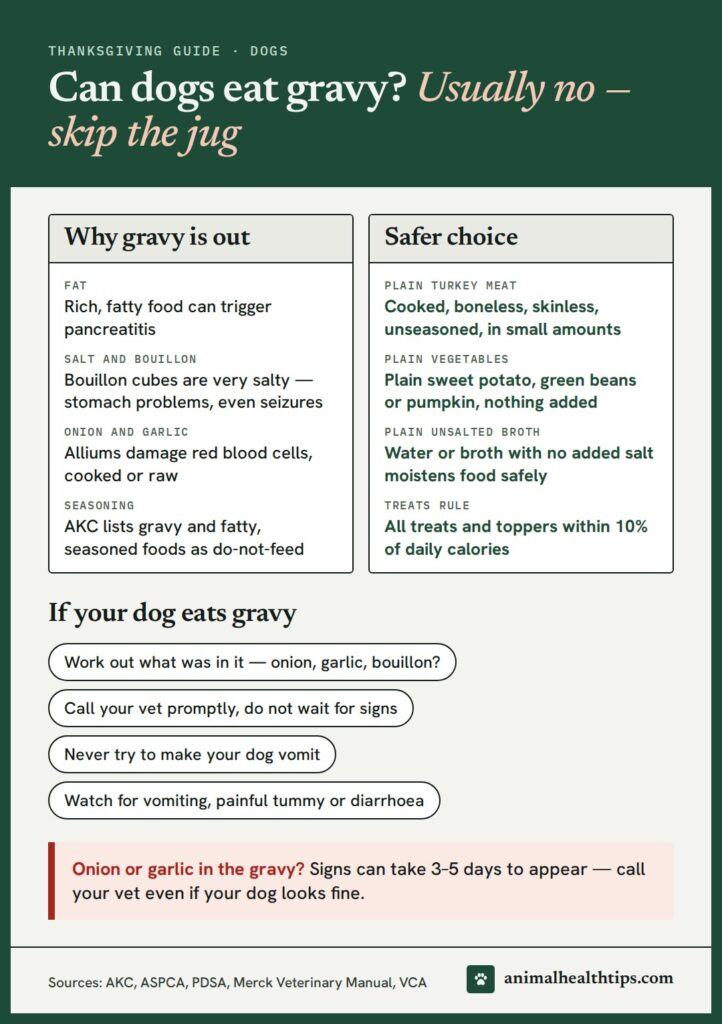
- Work out what was in the gravy: was it made with onion, garlic, bouillon or stock cubes? How much did your dog eat, and when?
- Call your vet promptly. The AKC says to contact your vet immediately if your dog eats something toxic or unsafe, and not to wait for symptoms.
- Never try to make your dog vomit at home. Only a vet should decide that, and only in the very early stages.
- Watch for signs over the next few days. Pancreatitis signs often start suddenly: vomiting, not eating, a painful tummy and diarrhoea. Onion and garlic damage is slower: the Merck Veterinary Manual says oxidative damage to red blood cells begins within 24 hours and peaks at about 72 hours, with red blood cell breakdown typically occurring three to five days after exposure. A dog that looks fine on the day is not necessarily in the clear.
- Keep them on their normal food. The ASPCA recommends sticking to your pet’s normal diet on Thanksgiving.
What can I serve instead?
Your dog does not need to miss out. The AKC says small amounts of plain turkey, sweet potatoes, potatoes, apples, pumpkin, green beans and peas are safe, as long as they are served plain, with no added butter, salt, sugar, seasonings or other rich or fatty ingredients. Plain mashed sweet potatoes are generally safe, but avoid versions topped with brown sugar, marshmallows or maple syrup. The ASPCA suggests a safe treat of pieces of boneless, fully cooked turkey, sweet potatoes and green beans mixed into your dog’s usual dinner.
| Food | How to serve it |
|---|---|
| Plain turkey meat | Cooked, boneless, skinless and unseasoned, in small amounts |
| Plain sweet potato | Cooked and mashed, with nothing added |
| Plain green beans | Set aside before butter or salt is added |
| Plain pumpkin puree | Pure pumpkin only, not spiced pie filling |
| Plain unsalted broth | Water or broth with no added salt, to moisten food |
If your dog’s food looks dry without gravy, VCA says adding water or broth with no added salt can improve a dog’s food intake: plain, unsalted broth, not seasoned gravy. Treats and toppers should still be no more than 10% of daily calories, so the plain food you share should be a small part of the day, not a second dinner. If you are planning the rest of the table, our guides to whether dogs can eat stuffing and whether dogs can eat turkey cover the other two dishes owners ask about most.
Keeping gravy off your dog’s plate on the day
- Serve your dog’s plate first, before the gravy, butter and seasoning go on the table. Plain food set aside early is safe food.
- Tell your guests. Children and visitors often share from their own plates, so make it clear that nothing from a plate is for the dog.
- Clear up as you go. The AKC advises storing leftovers properly and securing the bin, because bones, food scraps and wrappers can quickly become accessible to a curious dog.
- Keep your dog out of the kitchen while the meal is being served and cleared, when spills and dropped food are most likely.
Key takeaways
- Gravy is on the AKC’s do-not-feed list for dogs at Thanksgiving.
- Fat can trigger pancreatitis; bouillon is very salty; onion and garlic are toxic.
- Onion and garlic damage can take three to five days to show, so call your vet even if your dog looks fine.
- Serve plain turkey, plain vegetables or plain unsalted broth instead, in small amounts.
Frequently asked questions
Can dogs have a little gravy on their food?
No. The AKC lists gravy among the foods not to feed a dog at Thanksgiving, and the ASPCA warns that high-fat foods can lead to pancreatitis. Even a small amount adds fat, salt and very often onion or garlic.
What if the gravy was made without onion or garlic?
It is still not a good idea. Gravy is made from fatty meat drippings, and it is usually salty as well. The fat alone can upset a dog’s stomach or trigger pancreatitis, and the AKC lists fatty or heavily seasoned foods as foods not to feed.
My dog ate gravy. How long before I know they are fine?
Pancreatitis signs often start suddenly, but onion and garlic damage is slower: the Merck Veterinary Manual says red blood cell breakdown typically occurs three to five days after exposure. Call your vet promptly and watch for vomiting, not eating, a painful tummy or diarrhoea over the next few days.
What are the signs of pancreatitis in dogs?
PDSA lists vomiting, eating less or not at all, a painful tummy (dogs may stretch into a prayer position), diarrhoea and weight loss. Severe cases can be very serious, so book a vet appointment as soon as possible if you see any of these signs.
Is beef gravy safer than turkey gravy?
No. The problem is the same whatever meat it is made from: concentrated fat, salt, and very often onion, garlic or bouillon. The AKC makes no exception for the meat used.
Can I give my dog stock or broth instead?
Yes, if it is plain and unsalted. VCA says adding water or broth with no added salt can improve a dog’s food intake. Check the label first: shop-bought stock often contains onion, garlic and a lot of salt.
Sources
- American Kennel Club — Which Thanksgiving Foods Can Dogs Eat?
- ASPCA — Thanksgiving Safety Tips Will Keep Your Pets Feeling Thankful This Holiday
- PDSA — Pancreatitis in dogs
- Merck Veterinary Manual — Garlic and onion (Allium spp.) toxicosis in animals
- VCA Animal Hospitals — Nutrition and pancreatic disease in dogs
- VCA Animal Hospitals — Pancreatic lipase immunoreactivity in dogs
This guide is general information, not a diagnosis. If you are worried about your pet, contact your vet.
2 comments