Thanksgiving in the United States falls on 26 November this year, and pecan pie is the dessert on many tables. If your dog is watching you eat it, it is natural to wonder whether they can have a slice. The short answer is no — and the pie is worse than the nut alone. This guide follows the AKC, the ASPCA, the FDA, VCA Animal Hospitals, the Merck Veterinary Manual and UC Davis.
In this guide8 sections
Call your vet now if your dog has eaten pecan pie
- Note how much was eaten and when, and whether the pie was sugar-free.
- Do not wait for symptoms: xylitol can crash a dog’s blood sugar within 10 to 60 minutes.
- Never try to make your dog vomit at home. Only a vet should decide that.
- UK: Animal PoisonLine, 01202 509000 — open 24 hours, run by the Veterinary Poisons Information Service; a fee applies.
- US: ASPCA Animal Poison Control, (888) 426-4435 — open 24 hours; a consultation fee applies.
Can dogs eat pecan pie?
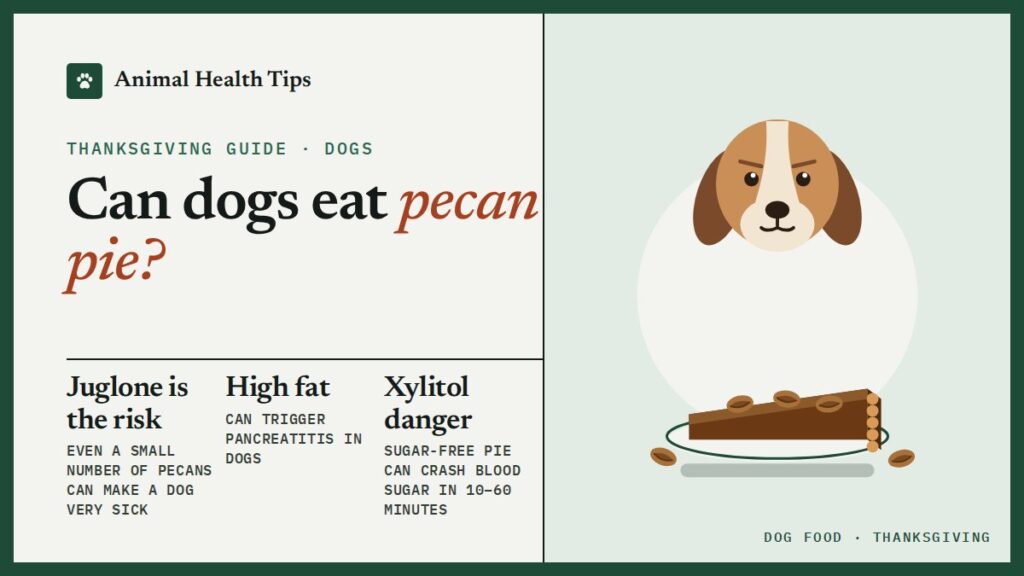
No. The AKC says plainly: if you are eating pecans or snacks filled with pecans, do not share them with your dog. Its chief veterinarian, Dr Jerry Klein, explains that though pecans are harmless to humans, pecans should not be given to dogs. Even a small number of these nuts can make a dog very sick, possibly causing neurological issues. A pie is pecans plus sugar, butter and pastry, so it starts from a food that is already out and adds more that is wrong for a dog.
The AKC’s Thanksgiving guide, updated on 3 November 2026, puts pies in the same group: do not feed dogs cookies, pies and sweets, sugar-free products containing xylitol, chocolate, alcohol, raisins and grapes, or onions, scallions and garlic. It says pumpkin pie should remain a people-only dessert, and the same holds for pecan pie. Thanksgiving often brings more emergency vet visits, because of the extra unsafe human food dogs end up eating.
Why pecans are a problem for dogs
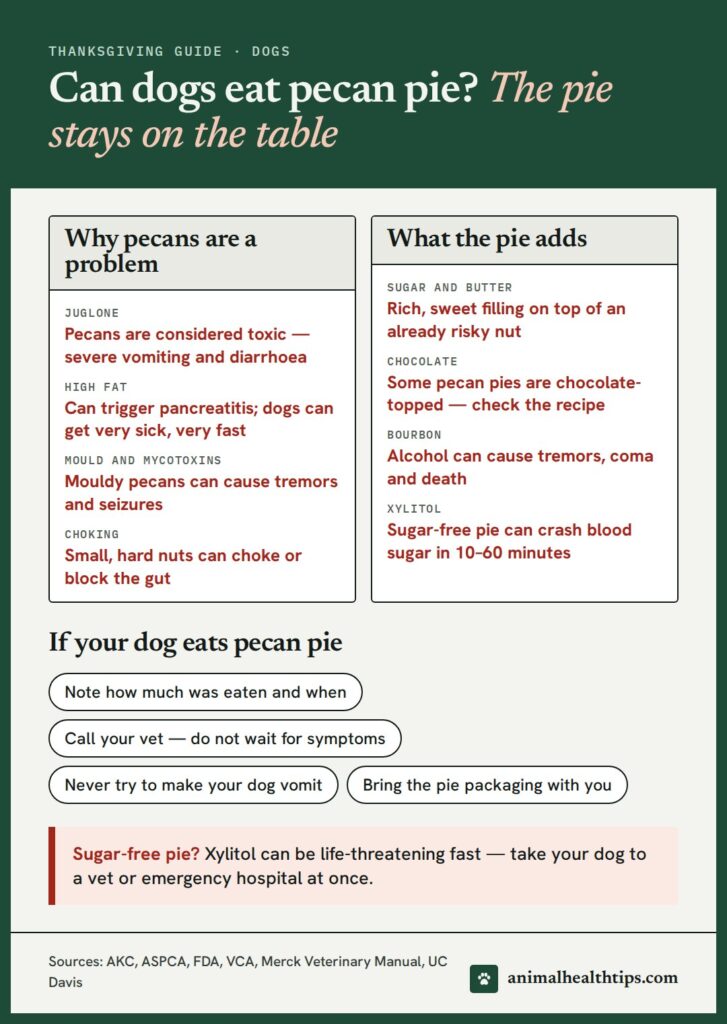
Four separate problems come with the nut itself. The first is juglone. The AKC says the reason pecans are considered toxic is that they contain a compound called juglone, also found in walnuts, that is harmful to dogs. Dogs who eat pecans are likely to experience severe vomiting from juglone, and it may also cause gastrointestinal problems such as diarrhoea.
The second problem is fat. Pecans are a high-fat nut, and the AKC says their high fat and oil content could lead to pancreatitis in dogs. The symptoms of pancreatitis include vomiting, diarrhoea, loss of appetite and lethargy, and dogs with pancreatitis, or suspected pancreatitis, need immediate veterinary care, because they can get very sick quickly and risk dehydration. VCA says pancreatitis may be triggered by a fatty meal, and that during an attack a dog may take a praying position, with its rear end up and its front legs and head lowered. Severe attacks can cause acute shock and death, and most dogs with severe pancreatitis are hospitalised for two to four days.
The third problem is mould. Pecans and walnuts are very susceptible to growing a particularly dangerous mould that contains mycotoxins, and dogs who ingest mycotoxins from pecans can experience tremors and seizures, as well as other neurological issues. Pecans are also susceptible to developing aflatoxin, produced from a mould that grows on pecan shells known as Aspergillus. The Merck Veterinary Manual says aflatoxins attack the liver, that acute and fatal aflatoxicosis has been documented in dogs, and that there is no specific antidote.
The fourth problem is the shell and the size. The AKC warns that pecans have extremely hard shells, which can lead to choking and blockages, and that once tree nuts fall to the ground they may become moist and develop a type of mould that can be toxic to dogs, causing seizures and other neurological symptoms. The ASPCA adds the same warning in general terms: nuts, including almonds, pecans and walnuts, contain high amounts of oils and fats, and these fats can cause vomiting and diarrhoea, and potentially pancreatitis in pets.
What the pie adds: sugar, butter and the label to check
The pie takes a risky nut and wraps it in sugar, butter and pastry. The filling is rich and sweet, and that richness alone is enough to upset a dog’s stomach and add to the pancreatitis risk. But three ingredients that sometimes appear in pecan pie carry risks of their own, and each one is verified. That is why the label matters: you need to know what is in the particular pie your dog ate.
| On the table | What’s in it | Safe for a dog? |
|---|---|---|
| Plain pecans | Juglone, high fat, possible mould | No — do not share them |
| Pecan pie | Pecans plus sugar, butter and pastry | No — the pie is worse than the nut alone |
| Chocolate pecan pie | Chocolate on top of the pie | No — chocolate is toxic to dogs |
| Bourbon pecan pie | Alcohol in the filling | No — alcohol can cause tremors and coma |
| Sugar-free pecan pie | May contain xylitol | No — xylitol can be life-threatening |
Chocolate is the first label to check. The ASPCA says its methylxanthines can cause vomiting, diarrhoea, panting, excessive thirst and urination, hyperactivity, abnormal heart rhythm, tremors, seizures and even death, and that darker chocolate carries the greater risk. Alcohol is the second: the ASPCA says foods containing alcohol can cause vomiting, diarrhoea, incoordination, depression, difficulty breathing, tremors, coma and even death.
Xylitol is the third, and the most urgent. The FDA says xylitol is used to sweeten sugar-free desserts and is also used in baked goods such as cakes, muffins and pies. In dogs it can trigger a potent release of insulin, causing a rapid and profound drop in blood sugar within 10 to 60 minutes, which can quickly be life-threatening if untreated. The symptoms include vomiting, then decreased activity, weakness, staggering, incoordination, collapse and seizures, and serious effects may not occur for up to 12 to 24 hours. Xylitol may also be listed as birch sugar or wood sugar. The ASPCA gives the same warning: xylitol can cause low blood sugar and potentially liver damage, with liver damage occurring within 12 to 24 hours.
What happens if a dog eats pecan pie
The first signs are usually vomiting and diarrhoea, from the juglone and the fat. If the pie was mouldy or the nuts were mouldy, tremors and seizures can follow: the Merck Veterinary Manual says the predominant signs of tremorgenic mycotoxicosis in dogs are vomiting, tremors, intention tremors, hyperesthesia, ataxia, nystagmus, tachycardia and seizures, with onset within one to two hours or up to several hours, and that large ingestions can cause seizures and death. There is no cause-effect or dose-effect relation established for single toxins, so no safe amount can be given.
If the pie was sugar-free, the timing is different and faster. The FDA says the blood sugar drop can happen within 10 to 60 minutes. The signs to watch for are vomiting, then decreased activity, weakness, staggering, incoordination, collapse and seizures. If the pie was chocolate-topped, watch for panting, excessive thirst and urination, hyperactivity and an abnormal heart rhythm. If it was a bourbon pie, watch for incoordination, depression and difficulty breathing.
Pancreatitis can be slower to show. VCA lists nausea, vomiting, fever, lethargy, abdominal pain, diarrhoea and decreased appetite as the most common signs, and says a dog may take the praying position. The AKC adds that a dog can get very sick even if it does not eat a large amount, and that if your dog eats pecans, even a small amount, you should contact a veterinarian right away.
What to do if your dog eats pecan pie
- Work out what was in it: whether the pie was sugar-free, chocolate-topped or made with bourbon, how much your dog ate, and when.
- Call your vet promptly. Do not wait for symptoms — xylitol can crash blood sugar within 10 to 60 minutes, and serious effects may not show for 12 to 24 hours.
- Bring the packaging. The vet needs it to estimate how much xylitol, chocolate or alcohol your dog may have eaten.
- Never try to make your dog vomit at home. Only a vet should decide that.
- Watch for warning signs: vomiting and diarrhoea, tremors and seizures, weakness and collapse, or abdominal pain and the praying position.
The safe swap: plain pumpkin
Plain pumpkin is the safe version of the dessert, and the AKC says it is a very healthy snack for dogs that helps with digestive health and is great for a dog’s skin and coat. If you are feeding canned pumpkin, make sure it is just pure pumpkin puree and not the pre-spiced or sugary pie mix. The AKC says pure pumpkin is a healthy food for dogs that works to relieve both diarrhoea and constipation, and to always choose 100% pumpkin puree.
Keep it inside the treats rule: UC Davis says treats should not exceed 10% of a dog’s daily calories, and 90% or more should come from a complete and balanced food. A spoonful of plain pumpkin puree is the safe version of the pie — and our guides to whether dogs can eat pumpkin pie and whether dogs can eat plain pumpkin follow the same plain-only rule. If you want to know more about the sweetener risk, our guide to whether xylitol is toxic to dogs explains it in full.
Keeping the dessert table safe at Thanksgiving
Thanksgiving dessert is a risky time for dogs in general, and the pie is only one of the dangers on the table. The AKC’s Thanksgiving guide says not to feed dogs raisins and grapes, and chocolate is toxic as well.
- Serve your dog’s plate first, before the desserts come out. A spoonful of plain pumpkin puree is the safe version of the pie.
- Tell your guests. Children and visitors often share from their own plates, so make it clear that nothing from a plate is for the dog.
- Clear up as you go. Put the pie dish and leftovers away promptly, so a curious dog cannot help themselves later.
- Keep your dog out of the kitchen while the meal is being served and cleared, when spills and dropped food are most likely.
Key takeaways
- Pecans are considered toxic to dogs — juglone can cause severe vomiting and diarrhoea, and even a small number can make a dog very sick.
- High fat can trigger pancreatitis, and mouldy pecans can carry mycotoxins that cause tremors and seizures.
- The pie adds sugar and butter, and sugar-free pie may contain xylitol, which can crash a dog’s blood sugar within 10 to 60 minutes.
- If your dog eats pie, call your vet at once, bring the packaging, and never try to make your dog vomit at home.
Frequently asked questions
Can dogs eat pecans?
No. The AKC says not to share pecans, or snacks filled with pecans, with your dog. Pecans are considered toxic because they contain juglone, and even a small number can make a dog very sick — so contact a veterinarian right away.
Can dogs eat pecan pie filling?
No. The pie is worse than the nut alone: it adds sugar, butter and pastry to the juglone, fat and mould risks of the pecans. The AKC’s Thanksgiving guide says not to feed dogs cookies, pies and sweets, and that pumpkin pie should remain a people-only dessert — the same holds for pecan pie.
Is pecan pie worse than plain pecans?
Yes. The pie keeps every risk of the nut and adds a rich, sweet filling, and some versions also contain chocolate, bourbon or xylitol. Check the recipe or label to know which risks your dog faced.
What should I do if my dog eats pecan pie?
Note how much was eaten, when, and whether the pie was sugar-free, chocolate-topped or made with bourbon, then call your vet promptly and do not wait for symptoms. Bring the pie packaging so the vet can estimate how much was eaten. Never try to make your dog vomit at home.
Can dogs eat plain pumpkin instead?
Yes. The AKC says pure pumpkin is a healthy food for dogs that relieves both diarrhoea and constipation. Serve 100% pumpkin puree, not pie filling or pre-spiced pie mix, and keep all treats together within 10% of your dog’s daily calories, as UC Davis advises.
What are the signs of pancreatitis in dogs?
VCA lists nausea, vomiting, fever, lethargy, abdominal pain, diarrhoea and decreased appetite. A dog may take a praying position, with its rear end up and its front legs and head lowered. Severe attacks can cause acute shock and death, so a dog showing these signs needs a vet at once.
Sources
- American Kennel Club — Can Dogs Eat Pecans?
- American Kennel Club — Can Dogs Eat Acorns and Tree Nuts?
- American Kennel Club — Thanksgiving Foods for Dogs
- ASPCA — People Foods to Avoid Feeding Your Pets
- US Food and Drug Administration — Paws Off Xylitol; It’s Dangerous for Dogs
- VCA Animal Hospitals — Pancreatitis in Dogs
- Merck Veterinary Manual — Aflatoxicosis in Animals
- UC Davis School of Veterinary Medicine — Treat Guidelines for Dogs
This guide is general information, not a diagnosis. If you are worried about your pet, contact your vet.