Ham sits next to the turkey on many Thanksgiving tables — Thanksgiving falls on 26 November this year — and a begging dog will be offered a slice. The short answer is no: ham is not advisable for dogs. It is cured, salty and fatty, and the glaze, the spice rub and the bone can be more dangerous than the meat itself.
In this guide7 sections
Call your vet now if your dog ate a ham bone, glazed ham, or ham with onion
- Note how much was eaten, what was in the glaze or rub, and when.
- Do not wait for symptoms: the damage can take days to show.
- Never try to make your dog vomit at home. Only a vet should decide that.
- UK: Animal PoisonLine, 01202 509000 — open 24 hours, run by the Veterinary Poisons Information Service; a fee applies.
- US: ASPCA Animal Poison Control, (888) 426-4435 — open 24 hours; a consultation fee applies.
Can dogs eat ham?
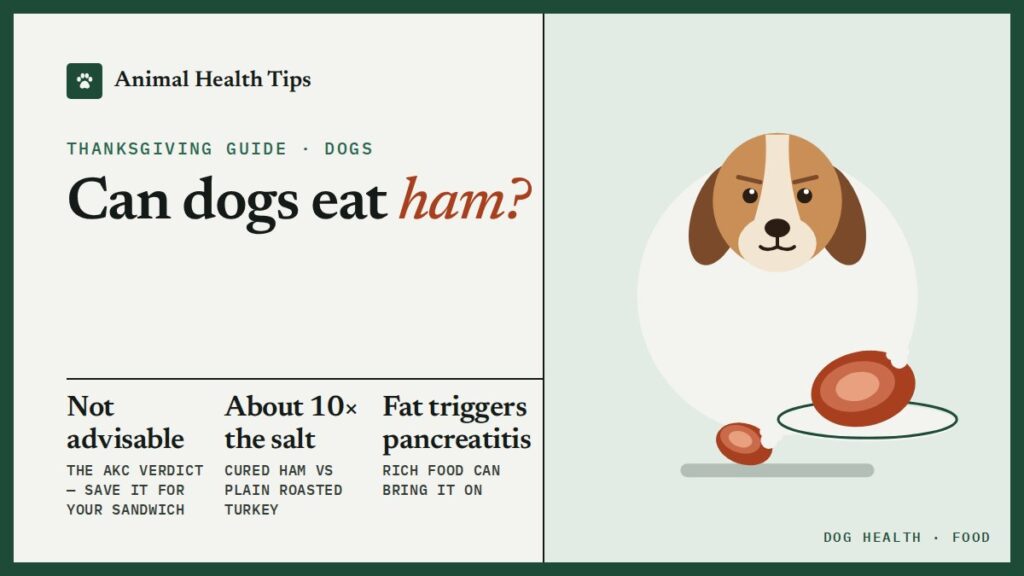
The American Kennel Club is direct: ham is not advisable for dogs. A little sliver once in a while probably will not hurt a dog — but save it for your own sandwich and choose a healthier treat instead. Ham is also on the AKC’s Thanksgiving list of foods not to feed a dog, alongside turkey bones, gravy, stuffing, chocolate and onions.
Plain, cooked pork is safe if kept simple — but ham is cured pork, not plain pork, and that curing is what pushes it off the safe list.
Why salt is the first problem
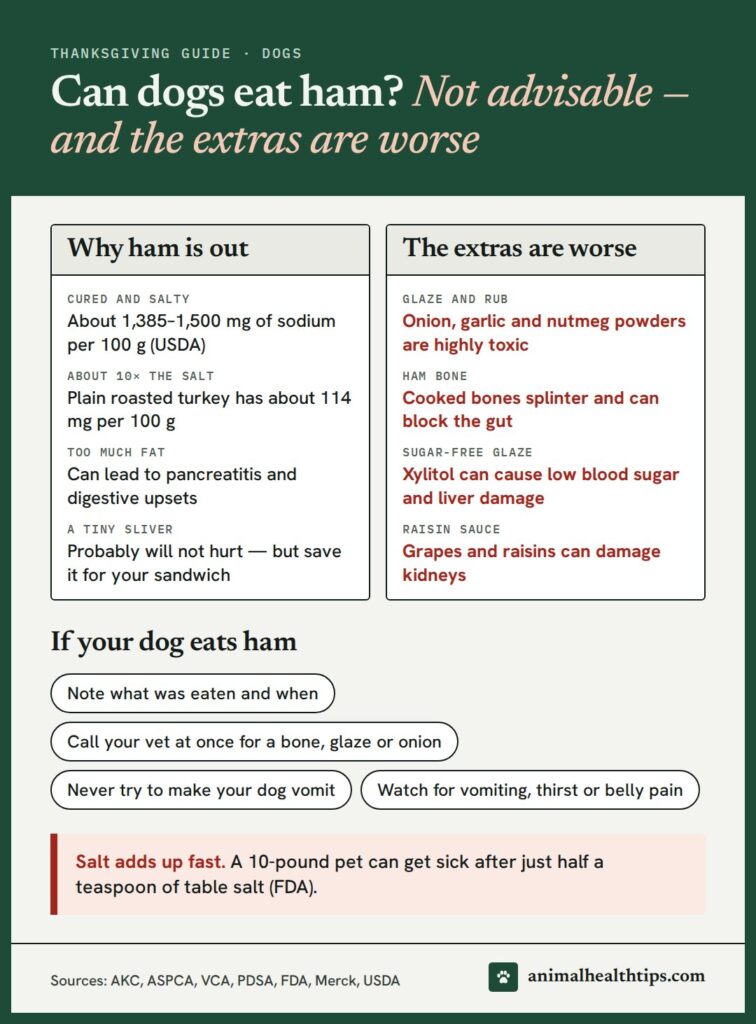
Store-bought ham contains a great deal of sodium, the AKC says, and even its preservatives are loaded with sodium-based nitrates and nitrites. USDA food data puts cured roasted ham at about 1,385 to 1,500 mg of sodium per 100 g, against about 114 mg for plain roasted turkey breast — roughly ten times the sodium of the same weight of plain turkey.
Excess salt can be toxic to dogs. The AKC lists vomiting, diarrhoea, excessive thirst and urination, lethargy and abnormal fluid accumulation — and in serious cases kidney damage, seizures, coma and even death. The ASPCA lists the same signs, adding depression and tremors.
It takes less salt than most owners think. The FDA notes that a 10-pound pet can get sick after eating just half a teaspoon of table salt, and that one and a half teaspoons can be fatal — a figure given for salt dough, but a useful measure of how little salt it takes. Merck adds that salt poisoning happens when animals eat too much salt without enough water to drink, and that there is no specific treatment: remove the salty food at once and give fresh water in small amounts, frequently.
| On the table | What’s in it | Safe for a dog? |
|---|---|---|
| Plain cooked pork | Unseasoned | Yes — kept simple |
| Cured ham slice | About 10× the sodium of plain turkey | No — not advisable |
| Glazed ham | Sugar and spice rub | No — call your vet |
| Ham with onion or garlic | Alliums, poisonous | No — call your vet |
| Ham bone | Cooked bone | No — call your vet |
Why fat is the second problem
Ham is fattier than many other meats, the AKC says, and that richness is difficult for a dog to digest. Too much fat can lead to pancreatitis and other digestive upsets. A healthy amount of animal fat in dog food is about 15 to 20 percent. If your dog is overweight, sharing holiday ham does them no favours.
Pancreatitis is inflammation of the pancreas. VCA explains that it is often not possible to identify the exact trigger, and that fat requires more pancreatic secretions to be digested and delays digestion — which is why prevention focuses on lower-fat diets and treats, with treats and toppers kept to no more than 10 percent of daily calories. PDSA lists the symptoms: pain and vomiting that often start suddenly, eating less, a painful tummy and weight loss. It can cause severe illness and even death if left untreated.
Some dogs are at higher risk: PDSA says a dog is more likely to develop pancreatitis if they are overweight, unwell, have recently had surgery, or have recently eaten high-fat foods such as pork, cheese or butter. The FDA warns against table scraps high in fat, such as fat trimmings or skin from a roast, which can cause an upset stomach and a potentially life-threatening, painful pancreatitis.
What about the glaze, the rub and the bone?
The glaze and the spice rub are where ham turns from inadvisable to dangerous. The AKC says seasonings and spice rubs containing onion powder, nutmeg or garlic powder are extremely dangerous, because they are highly toxic to dogs. Sauces are no better: barbecue sauce, for example, is high in salt and sugar and often contains garlic and onion.
Onion and garlic damage red blood cells. The ASPCA says alliums can cause gastrointestinal irritation and red blood cell damage, which can lead to anaemia. Merck adds that garlic is three to five times more toxic than onion, and that concentrated forms — flakes, powders and soup mixes, exactly what a spice rub is — are most commonly linked to poisoning. The damage starts within 24 hours and peaks at about 72 hours, and red blood cell breakdown typically occurs three to five days after exposure: lethargy, weakness, pale gums, yellowing, collapse — and death may occur.
Sugar-free glazes carry a different poison. Xylitol can cause low blood sugar and potentially liver damage, the ASPCA says, with initial signs of vomiting, lethargy and loss of coordination that can progress to seizures, and liver damage within 12 to 24 hours. The FDA says vomiting is generally first, followed by weakness, staggering, collapse and seizures. A raisin sauce is just as serious: the ASPCA says grapes and raisins can lead to kidney damage in dogs.
Then there is the bone. Once cooked, a ham bone dries out, becomes fragile and brittle, and when gnawed can splinter into sharp pieces, the AKC says, causing damage to the oesophagus and internal organs, and choking. The ASPCA warns that bones can injure or obstruct the gut, which could be serious and require surgery. The FDA adds that blockage symptoms might not be immediate — hours to days later.
What should I do if my dog eats ham?
- Work out what was in it: plain ham, glazed ham, or ham with onion, garlic, xylitol or raisins — and how much, and when.
- A tiny sliver of plain ham: watch for vomiting, diarrhoea, excessive thirst or lethargy, and call your vet — especially for a small dog or a puppy.
- A large amount, glazed ham, or ham with onion, garlic, xylitol or raisins: contact your vet or ASPCA Animal Poison Control at (888) 426-4435 immediately.
- A ham bone swallowed or chewed: contact your vet promptly — a blockage may only show hours to days later.
- Never try to make your dog vomit at home. Only a vet should decide that.
- Keep the packaging or the recipe for the vet.
What can I give my dog instead at Thanksgiving?
- A few small bites of plain, fully cooked, boneless, skinless turkey with no seasoning — see our guide to whether dogs can eat turkey.
- Plain sweet potato, plain green beans or plain pumpkin puree (not pie filling) — the AKC lists all three as safe for dogs, in small amounts and served plain. See our guides to whether dogs can eat green beans and whether dogs can eat pumpkin.
- Tell your guests that nothing from a plate is for the dog, and empty the bin through the day — the ASPCA warns it fills up with bones, chocolate, onions and other holiday hazards.
Key takeaways
- Ham is not advisable for dogs: cured ham carries about ten times the sodium of plain turkey.
- Too much fat can trigger pancreatitis — a painful, potentially life-threatening illness.
- Glazes and rubs can hide onion, garlic, xylitol or raisins.
- A cooked ham bone can splinter and block the gut.
Frequently asked questions
Can dogs eat ham?
No, ham is not advisable for dogs. Cured ham carries about ten times the sodium of plain turkey, and its fat can trigger pancreatitis. A tiny sliver of plain ham once in a while is unlikely to harm a healthy dog.
How much ham is too much for a dog?
No approved source publishes a safe amount of ham by dog weight, so this article gives none. The risk rises with the amount and the glaze, and is higher for a small dog or a puppy.
Can dogs eat a ham bone?
No. Once cooked, a ham bone dries out and becomes brittle, and can splinter into sharp pieces that damage or block the gut. If your dog swallowed or chewed one, contact your vet promptly.
What should I do if my dog eats glazed ham?
Note how much was eaten and what was in the glaze, then call your vet or ASPCA Animal Poison Control at (888) 426-4435 right away.
Is deli ham safer than roast ham?
No — deli ham is still cured and salty, and often carries added flavourings. The AKC’s answer covers ham generally: not advisable. Plain, cooked, unseasoned pork is the safer choice, in small amounts.
Sources
- American Kennel Club — Can Dogs Eat Ham?
- American Kennel Club — Can Dogs Eat Pork?
- American Kennel Club — Thanksgiving Foods for Dogs
- ASPCA — People Foods to Avoid Feeding Your Pets
- ASPCA — Thanksgiving Safety Tips
- VCA Animal Hospitals — Nutrition and Pancreatic Disease in Dogs
- PDSA — Pancreatitis in Dogs
- US FDA — Keep Your Dogs and Cats Safe From Holiday Hazards
- Merck Veterinary Manual — Garlic and Onion (Allium spp.) Toxicosis in Animals
This guide is general information, not a diagnosis. If you are worried about your pet, contact your vet.