Sweet potatoes are one of the safer-looking dishes on the Thanksgiving table: plain, orange and soft. For a cat, the answer depends entirely on which sweet potato you mean. A small piece of plain, cooked, peeled sweet potato is fine as an occasional treat: the ASPCA lists sweet potato as non-toxic to cats, and PDSA uses cooked, mashed sweet potato in a vet-approved cat recipe. The sweet potato casserole on the table is a different food, and a cat should not eat it. This guide follows the ASPCA, PDSA, VCA, International Cat Care and the Cornell Feline Health Center.
In this guide6 sections
Call your vet today if your cat has eaten sweet potato casserole
- Note what was in it, especially onion, garlic or a sugar-free sweetener, and how much your cat ate.
- Do not wait for signs if it contained onion, garlic or a sugar-free sweetener.
- Never try to make your cat vomit at home. Only a vet should decide that.
- UK: Animal PoisonLine, 01202 509000 — open 24 hours, run by the Veterinary Poisons Information Service; a fee applies.
- US: ASPCA Animal Poison Control, (888) 426-4435 — open 24 hours; a consultation fee applies.
Can cats eat sweet potatoes?
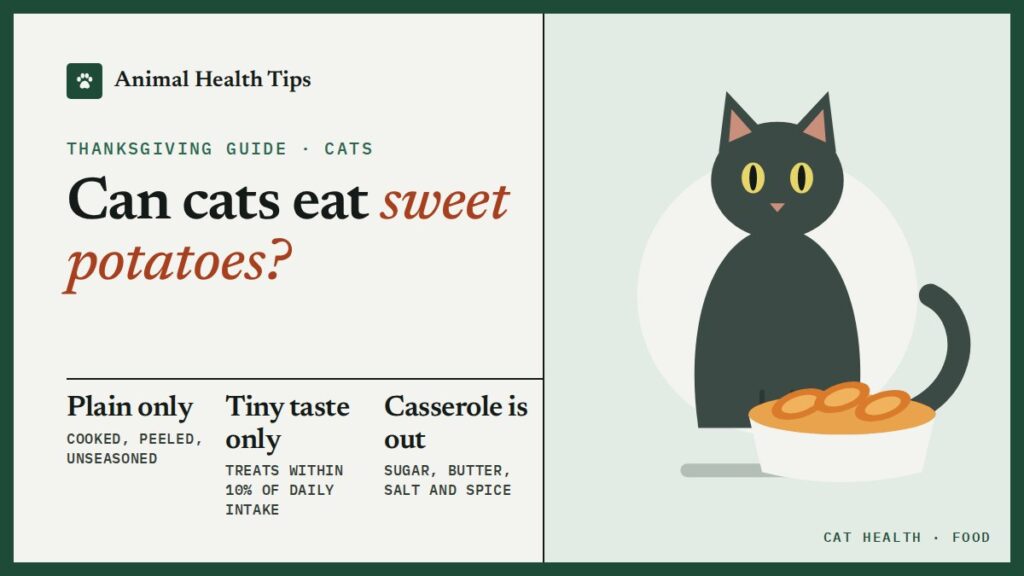
Yes, in the plain form. The ASPCA lists sweet potato (Ipomoea batatas) as non-toxic to cats, as well as to dogs and horses. PDSA’s vet-approved cat recipe uses cooked sweet potato, pureed or mashed: roast it, allow it to cool, peel it, then blend it until smooth. That is the whole preparation. No butter, no milk, no cream, no salt, no sugar and no spice.
Introduce it slowly and in small amounts, especially if your cat has a sensitive tummy or a medical condition, and check with your vet first if you are unsure. VCA gives the same advice for any new food: introduce new things slowly and one at a time, giving only a small piece to try at first. If your cat has a medical condition or is on a special food, check with your veterinary care team first.
Why sweet potato gives a cat so little
Cats are obligate carnivores, which means they are dependent on a meat diet and cannot thrive or survive without it. International Cat Care explains that cats need the amino acids taurine, arginine, methionine and cysteine, which are not found in plants, and that cats cannot convert and use other amino acids from plants the way dogs and people can. Without them, cats become unwell.
Cats are also less able to digest and use carbohydrates than we are. International Cat Care says they get most of their blood sugar, and so their energy, from the breakdown of protein rather than carbohydrates, and they need preformed vitamins present in animals but not in plants, including vitamin A. Sweet potato is a carbohydrate, so it gives a cat very little of what a cat actually needs. Cornell adds that a cat’s food should be complete and balanced, that feeding too much will likely make a cat overweight, and that diabetic cats should ideally eat a diet moderately restricted in carbohydrates. Sweet potato is therefore a treat, never a food: PDSA says treats should make up no more than 10% of a cat’s daily food intake, and VCA says the same for daily calories, with 90% coming from complete and balanced food.
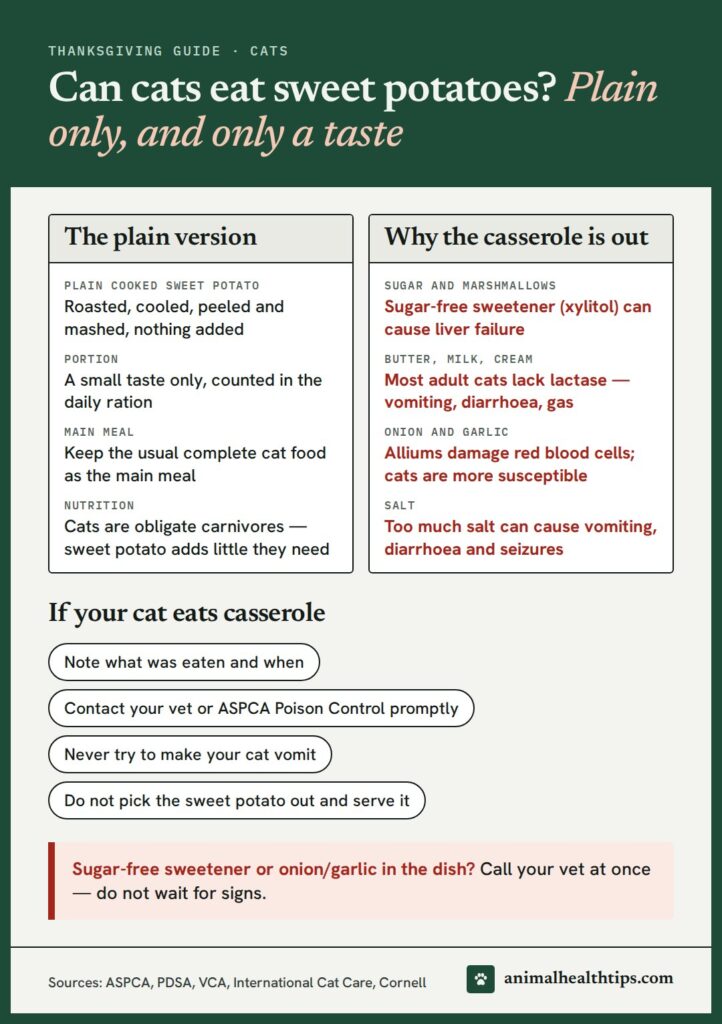
The plain version: how to serve it
- Cook it plain. Roast or boil a sweet potato with nothing added, then allow it to cool.
- Peel it and mash it. PDSA’s method is to peel, then blend or mash until smooth.
- Serve a small taste only, counted in the daily ration and within the 10% treats rule.
- Keep the usual food as the main meal. A complete, balanced cat food should still make up the rest of the day.
- Watch how your cat reacts. Introduce it slowly, one new food at a time, and stop if it upsets your cat’s tummy.
If you are building your cat’s Thanksgiving plate, the same plain-only rule applies to the other dishes. Our guides to whether cats can eat turkey and whether cats can eat mashed potatoes follow the same pattern: plain meat and plain vegetables only, in tiny amounts.
Why the Thanksgiving casserole is different
The casserole on the table is not sweet potato. It is sweet potato plus everything a cat should not eat: sugar or brown sugar, marshmallows, butter, milk or cream, salt, and sometimes onion or garlic seasoning and a nut topping. Each carries its own verified warning from ASPCA Poison Control.
| Casserole ingredient | Why it is a problem for cats |
|---|---|
| Sugar and marshmallows | Sugar-free sweetener (xylitol) can cause liver failure; sugary food is not a cat food |
| Butter, milk, cream | Most adult cats lack lactase, so milk products cause diarrhoea and digestive upset |
| Onion and garlic | Alliums cause stomach irritation and red blood cell damage; cats are more susceptible than dogs |
| Salt | Too much salt can cause vomiting, diarrhoea, tremors, seizures and even death |
| Nuts on top | Nuts add fat and sugar and are not a cat food; no nut is part of a cat’s diet |
Sugar-free sweetener is the most urgent of these. ASPCA Poison Control says xylitol, used as a sweetener in many sweets and baked goods, can cause insulin release, which leads to low blood sugar and liver failure. Early signs include vomiting, lethargy and loss of coordination, and signs can progress to seizures; liver failure can be seen within a few days. Salt is also a real risk: large amounts can produce excessive thirst and urination, or even sodium ion poisoning. And milk products cause cats diarrhoea or other digestive upset, because pets do not possess significant amounts of lactase.
Once mixed, the sweet potato has soaked up the butter, sugar, salt and seasoning around it, so it is no longer the plain food the ASPCA lists as non-toxic. Cook a plain piece separately instead. Plain pumpkin is another safe plain option, and our guide to whether cats can eat pumpkin explains the same plain-only rule for it.
What to do if your cat eats casserole
- Note what was eaten, how much and when. ASPCA Poison Control asks owners to note the amount ingested before calling.
- Contact your vet or ASPCA Poison Control promptly. Do not wait for signs if the dish contained onion, garlic or a sugar-free sweetener.
- Watch for warning signs: vomiting, lethargy, loss of coordination, diarrhoea, tremors or seizures. With xylitol, signs can progress over a few days, so keep watching even if your cat seems fine at first.
- Never try to make your cat vomit at home. Only a vet should decide that.
- Keep the rest of the casserole out of reach and clear the table as soon as the meal is over, so your cat cannot help themselves later.
Key takeaways
- Plain, cooked, peeled sweet potato is non-toxic to cats and fine as a tiny occasional treat.
- Cats are obligate carnivores, so sweet potato gives them very little they need.
- The Thanksgiving casserole is out: sugar, butter, milk, salt, onion, garlic and sugar-free sweetener.
- Keep all treats within 10% of daily intake, and call your vet if your cat eats casserole.
Frequently asked questions
Can cats eat sweet potato casserole?
No. The casserole contains sugar, butter, milk or cream, salt, and sometimes onion, garlic or a sugar-free sweetener. Each of those is a separate risk for cats, and the sweet potato in it is no longer plain. Cook a plain piece separately if you want to share.
Is sweet potato toxic to cats?
No. The ASPCA lists sweet potato as non-toxic to cats. The danger is not the sweet potato itself, but the casserole it is served in at Thanksgiving, which adds sugar, fat, salt and seasoning.
How much sweet potato can a cat have?
Only a small taste, counted within the treats rule: no more than 10% of your cat’s daily food intake or calories. No approved source gives an exact spoonful size for sweet potato, so keep it tiny and occasional.
Do cats need sweet potato in their diet?
No. Cats are obligate carnivores and need meat-derived amino acids and preformed vitamin A, which plants do not provide. They get most of their energy from protein, not carbohydrates, so sweet potato adds nothing their normal food does not already give them.
Can I give my cat sweet potato every day?
No. It is an occasional treat, not a daily food. VCA says 90% of a cat’s calories should come from complete and balanced food, and too many treats can unbalance the diet and contribute to weight gain.
My cat ate some casserole. What should I do?
Note what was in it and how much your cat ate, then contact your vet or ASPCA Poison Control promptly, especially if it contained onion, garlic or a sugar-free sweetener. Watch for vomiting, lethargy or diarrhoea, and never try to make your cat vomit at home.
Sources
- ASPCA — Sweet Potato Vine (toxic and non-toxic plants)
- PDSA — Cat-friendly pancake recipe
- VCA Animal Hospitals — Cat treats
- International Cat Care — Feeding your cat or kitten
- Cornell Feline Health Center — How often should you feed your cat?
- ASPCA Poison Control — People foods pets should never eat
This guide is general information, not a diagnosis. If you are worried about your pet, contact your vet.