Pumpkin pie ends almost every Thanksgiving meal in the United States — Thanksgiving falls on 26 November this year — and a cat that begs at the table may get offered a spoonful. The short answer is no, but the reason is not the pumpkin. Plain pumpkin is safe for cats in small amounts. The pie is a different dish, and what is added to it is the problem. This guide follows the ASPCA, VCA Animal Hospitals, the Cornell Feline Health Center, the FDA, the Merck Veterinary Manual and International Cat Care.
In this guide9 sections
- Can cats eat pumpkin pie?
- Is plain pumpkin safe for cats?
- What is in pumpkin pie that makes it unsafe for cats?
- Is nutmeg toxic to cats?
- What about cinnamon, ginger and allspice in pumpkin pie?
- Is sugar-free pumpkin pie safe for cats?
- What about raw pumpkin, rind, seeds and mouldy pumpkin?
- What should I do if my cat eats pumpkin pie?
- Frequently asked questions
Call your vet now if your cat has eaten pumpkin pie
- Note how much was eaten and when, and whether the pie was sugar-free.
- Do not wait for symptoms: nutmeg can cause vomiting, agitation and a fast heart rate in large amounts.
- Never try to make your cat vomit at home. Only a vet should decide that.
- UK: Animal PoisonLine, 01202 509000 — open 24 hours, run by the Veterinary Poisons Information Service; a fee applies.
- US: ASPCA Animal Poison Control, (888) 426-4435 — open 24 hours; a consultation fee applies.
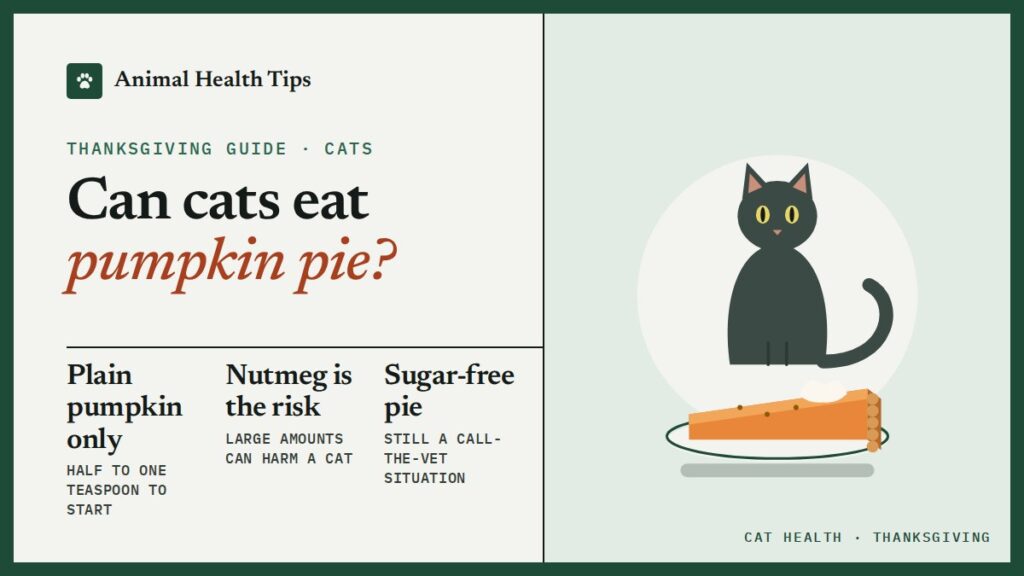
Can cats eat pumpkin pie?
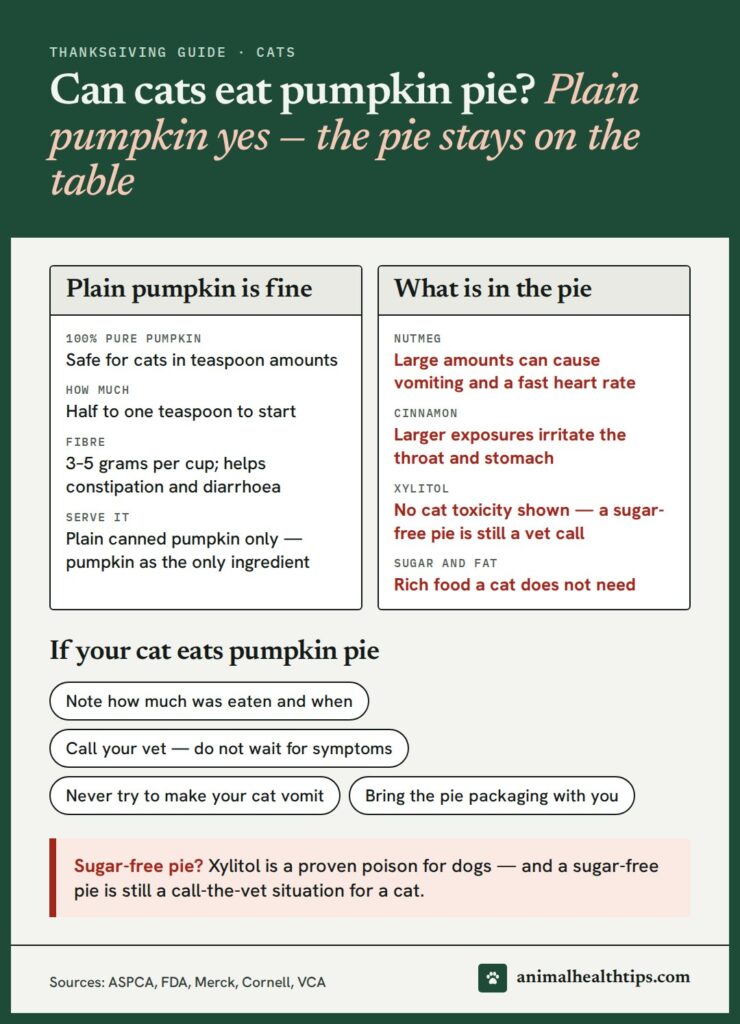
No. The ASPCA says pumpkin is non-toxic to cats, and VCA says plain pumpkin puree is safe for most pets to eat. But the pie is not plain pumpkin. The pie is pumpkin plus sugar, butter or cream, pastry and a spice mix, and two of those additions carry real risks for a cat. The ASPCA says desserts can contain artificial sweeteners such as xylitol, which can cause low blood sugar and liver damage — keep all desserts out of paws’ reach. The pie is a people dessert, and it should stay that way.
Cats are obligate carnivores, which is the deeper reason the pie does not suit them. International Cat Care says cats are dependent on a meat diet and cannot thrive or survive without it, that they are less able to digest and use carbohydrates, and that they get most of their blood sugar from the breakdown of protein. A sweet, starchy pie is the opposite of what a cat’s body is built to eat.
Is plain pumpkin safe for cats?
Yes — plain pumpkin is the safe version, and the difference is what is added. The ASPCA lists pumpkin as non-toxic to cats, and VCA says pumpkin and pumpkin seeds are non-toxic, but can upset a cat’s stomach in large quantities. The Cat Watch Newsletter, from Cornell, says to use plain canned pumpkin only — pumpkin should be the only ingredient — because pie filling has spices and sugar added that a pet does not need and that may make them ill.
Plain pumpkin can even help a cat’s digestion. Cornell says canned pumpkin is a soluble fibre that is fermented in the colon, producing short-chain fatty acids which may promote contraction of colonic smooth muscle, and that dietary fibre is used to improve intestinal motility in constipated cats. The Cat Watch Newsletter says pureed pumpkin has three to five grams of fibre per cup, and that the fibre can help with constipation and with diarrhoea, because it draws in excess fluid and firms up stools. For digestive aid, start with a half to one teaspoon — too much can tip a cat from one extreme to the other.
| On the table | What’s in it | Safe for a cat? |
|---|---|---|
| Plain canned pumpkin | 100% pumpkin, nothing added | Yes — start with half to one teaspoon |
| Pumpkin pie | Sugar, butter, pastry and spices | No — the additions are the problem |
| Canned pumpkin pie mix | Sweetened and pre-spiced filling | No — it may contain xylitol |
| Sugar-free pumpkin pie | May contain xylitol (birch sugar) | No — call your vet |
What is in pumpkin pie that makes it unsafe for cats?
Four things in the pie carry the risk. Sugar is the first: the pie is sweetened, and cats do not need sugar at all — International Cat Care says cats are less able to digest and use carbohydrates. Butter and cream are the second: they make the pie rich and fatty. Pastry is the third: it adds fat and starch to a dish a cat’s body is not built to digest. And the spice mix is the fourth. The ASPCA says herbs and spices in holiday dishes contain essential oils and resins that can cause stomach upset and central nervous system depression in pets, especially cats.
The fat in the pie needs one careful note: the cat story is different from the dog story. VCA is explicit: unlike dogs, cats do not appear to develop pancreatitis as the result of eating a high-fat diet. So this article does not claim that the fat in pumpkin pie causes pancreatitis in cats.
Is nutmeg toxic to cats?
Nutmeg is the pie spice to watch. The ASPCA says nutmeg contains a chemical that can cause a wide variety of problems when large amounts are ingested: vomiting, dry mouth, agitation, dilated or constricted pupils, fast heart rate, difficulty walking or standing up, and hallucinations. The key words are large amounts — no approved source gives a toxic threshold for nutmeg in cats, so this article gives none. A spoonful of pie contains only a small amount of nutmeg, but the pie has other problems too.
Watch for vomiting, dry mouth, agitation, pupils that are unusually wide or narrow, a fast heart rate, and difficulty walking or standing up. If your cat shows any of those after eating pie, call your vet at once. VCA says known or suspected toxin ingestion is an emergency that requires veterinary attention.
What about cinnamon, ginger and allspice in pumpkin pie?
Cinnamon is the second spice in the mix. Small exposures may cause mild stomach upset, while larger exposures can cause significant irritation of the throat and stomach, hyperactivity and fast heart rates. If cinnamon is accidentally inhaled it can lead to coughing, trouble breathing and pneumonia. A spoonful of pie is a small exposure, so cinnamon alone is unlikely to be the main danger.
Ginger and allspice are named here only as part of a typical pumpkin pie spice mix — no approved source found in this session gives their effects on cats specifically. The ASPCA’s pumpkin-spice article covers cinnamon and nutmeg only. So this article does not claim ginger or allspice are toxic to cats, or safe either — only that they are in the mix, and that the mix as a whole is not for cats.
Is sugar-free pumpkin pie safe for cats?
No — and this is the part of the cat story that is most often told wrong. Xylitol is a proven poison for dogs, but it has not been shown to poison cats. The FDA says xylitol is used to sweeten sugar-free products including baked goods such as cakes, muffins and pies. In dogs it can cause a rapid and profound drop in blood sugar within 10 to 60 minutes of eating it, and serious adverse effects may not occur for up to 12 to 24 hours. But the FDA also says xylitol does not seem to be as dangerous for cats, and that cats appear to be spared, at least in part, by their disdain for sweets.
The Merck Veterinary Manual is even clearer: dogs are the only domestic species in which xylitol toxicosis has been reported, and cats are not at risk for hypoglycaemia or liver injury from xylitol toxicosis. A 2018 clinical trial tested this directly: six healthy middle-aged cats were given oral xylitol at 100, 500 and 1,000 mg/kg — doses toxic to dogs — and blood glucose did not change significantly, except a mild increase at 1,000 mg/kg that stayed within the physiological range. The trial concluded that xylitol did not induce toxic effects on cats.
That does not make a sugar-free pie safe for a cat. VCA’s Halloween guidance for cats says mints and gum may be artificially sweetened with xylitol which may be toxic for cats — so a sugar-free pie is still a call-the-vet situation, even though the Merck Manual, the FDA and the 2018 trial find no proven cat toxicity. Call your vet and tell them the pie was sugar-free. If you want the full dog story, our guide to whether xylitol is toxic to dogs explains it — and our guides to whether cats can eat plain pumpkin and whether cats can eat chocolate follow the same plain-only rule for the rest of the table.
What about raw pumpkin, rind, seeds and mouldy pumpkin?
Raw pumpkin is not recommended for cats, according to the Cat Watch Newsletter. The cooked or canned kind is the safe form, and only when it is plain. The same source says not to feed a cat a Halloween jack o’ lantern after the holiday, as it may have mould. The ASPCA says mouldy foods can contain mycotoxins, and that the signs include vomiting, difficulty walking, changes to the heart, tremors and seizures, which can cause hyperthermia — and this can quickly become life-threatening. Pumpkin seeds are also non-toxic, VCA says, but can upset a cat’s stomach in large quantities.
What should I do if my cat eats pumpkin pie?
- Work out what was in it: whether the pie was sugar-free, how much was eaten, and when.
- Call your vet promptly. VCA says known or suspected toxin ingestion is an emergency that requires veterinary attention — do not wait for symptoms.
- Bring the packaging. The vet needs it to know whether the pie contained xylitol or another sweetener.
- Never try to make your cat vomit at home. Only a vet should decide that.
- Watch for warning signs: vomiting, dry mouth, agitation, a fast heart rate and difficulty walking can point to nutmeg; vomiting, diarrhoea and tremors can point to mouldy food.
Plain pumpkin is the safe version of the pie: start with half to one teaspoon of plain canned pumpkin, with pumpkin as the only ingredient. The same plain-only rule applies to the rest of the table — our guide to whether cats can eat turkey follows it too.
Key takeaways
- Plain pumpkin is safe for cats in teaspoon amounts; pumpkin pie is not.
- Nutmeg can cause vomiting, agitation and a fast heart rate in large amounts — and no safe dose is known for cats.
- Xylitol is a proven poison for dogs, but no toxicity has been shown in cats — a sugar-free pie is still a call-the-vet situation.
- Unlike dogs, cats do not appear to develop pancreatitis from a high-fat diet — the pie is out because of its spices and sweetener.
- If your cat eats pie, call your vet at once and bring the packaging — never try to make your cat vomit at home.
Frequently asked questions
Can cats eat pumpkin pie?
No. Plain pumpkin is safe for cats in teaspoon amounts, but the pie adds sugar, butter, pastry and spices. Nutmeg can cause vomiting, agitation and a fast heart rate, and sugar-free pie may contain xylitol. Give plain 100% pumpkin instead, and call your vet if your cat eats pie.
Is plain pumpkin safe for cats?
Yes. The ASPCA lists pumpkin as non-toxic to cats, and Cornell says canned pumpkin fibre can help with constipation and diarrhoea. Use plain canned pumpkin only, and start with half to one teaspoon — too much can tip a cat from one extreme to the other.
Is nutmeg toxic to cats?
Nutmeg contains a chemical that can cause vomiting, dry mouth, agitation, dilated or constricted pupils, fast heart rate, difficulty walking and hallucinations when large amounts are eaten. No approved source gives a toxic dose for cats — keep the pie away from your cat altogether.
Is xylitol toxic to cats?
No toxicity has been shown in cats. The Merck Veterinary Manual says dogs are the only domestic species in which xylitol toxicosis has been reported, and a 2018 trial found no toxic effects in cats given doses toxic to dogs. A sugar-free pie is still a call-the-vet situation.
Can cats eat pumpkin pie filling?
No. Canned pie filling has spices and sugar added, and a pet does not need those additives — they may make them ill. Use plain canned pumpkin only, with pumpkin as the only ingredient, and never pie filling.
What should I do if my cat eats pumpkin pie?
Note how much was eaten and when, and whether the pie was sugar-free, then call your vet promptly and do not wait for symptoms. Bring the pie packaging. Never try to make your cat vomit at home.
Sources
- ASPCA — Acorn Squash (Toxic and Non-Toxic Plants)
- ASPCA — When Pumpkin Spice Is Not So Nice
- ASPCA — How to Have a Happy, Healthy, and Humane Thanksgiving With Your Pets
- ASPCA — Keep Your Pets Safe During Back-to-School Season
- VCA Animal Hospitals — 4 Tips to Avoid Common Pet Hazards This Thanksgiving
- VCA Animal Hospitals — Halloween Safety Tips for Cats
- VCA Animal Hospitals — Nutrition and Pancreatic Disease in Cats
- Cornell University Feline Health Center — Constipation
- Cat Watch Newsletter (Cornell) — The Many Perks of Feeding Pumpkin
- US Food and Drug Administration — Paws Off Xylitol; It’s Dangerous for Dogs
- Merck Veterinary Manual — Xylitol Toxicosis in Dogs
- Jerzsele et al., Journal of Veterinary Pharmacology and Therapeutics 2018 — Oral xylitol in cats (PMID 29430681)
- International Cat Care — Feeding Your Cat or Kitten
This guide is general information, not a diagnosis. If you are worried about your pet, contact your vet.