Halloween is days away, and chocolate is everywhere: in trick-or-treat bowls by the door, in sweet jars, and on baking trays. Cats are curious, and a cat that bats at a shiny wrapper or noses an open box can easily end up eating chocolate. That is a problem, because chocolate is toxic to cats — and a tiny amount can do serious damage.
In this guide8 sections
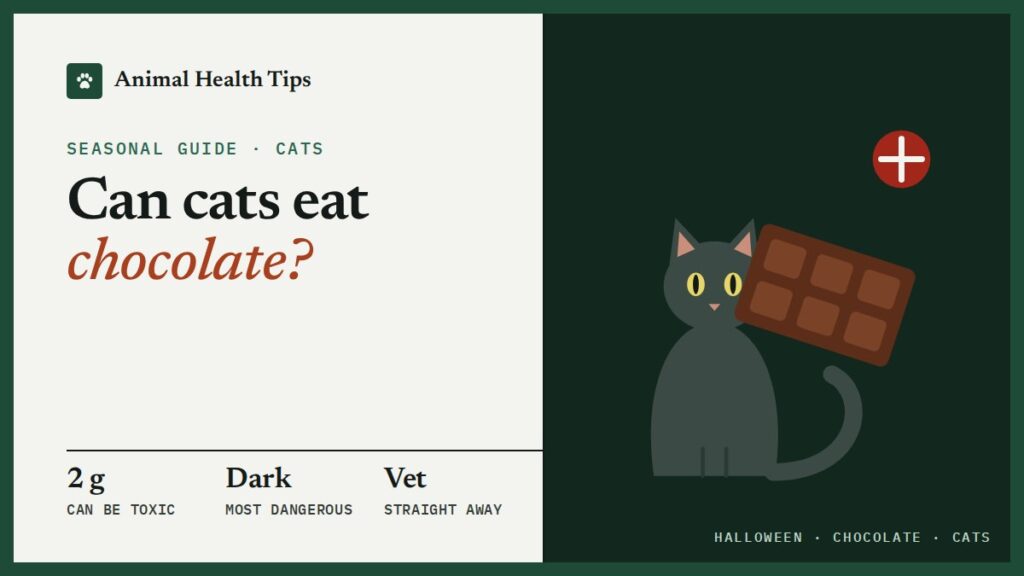
In 2025, ASPCA Poison Control took calls about more than 376,000 pet exposures, and chocolate made up 13.6% of them, ranking fourth overall. Dogs get into trouble most often, but cats are not safe. Cats may only sample chocolate rather than gorge on it, yet sampling is enough. Cats Protection warns that just two grams of chocolate is toxic for a cat — not even as big as a square. That is a warning, not a safe amount: any chocolate eaten is a reason to call a vet.
Go to a vet now if your cat has eaten chocolate
- Do not wait for symptoms. By the time they appear, the poisoning may be worse.
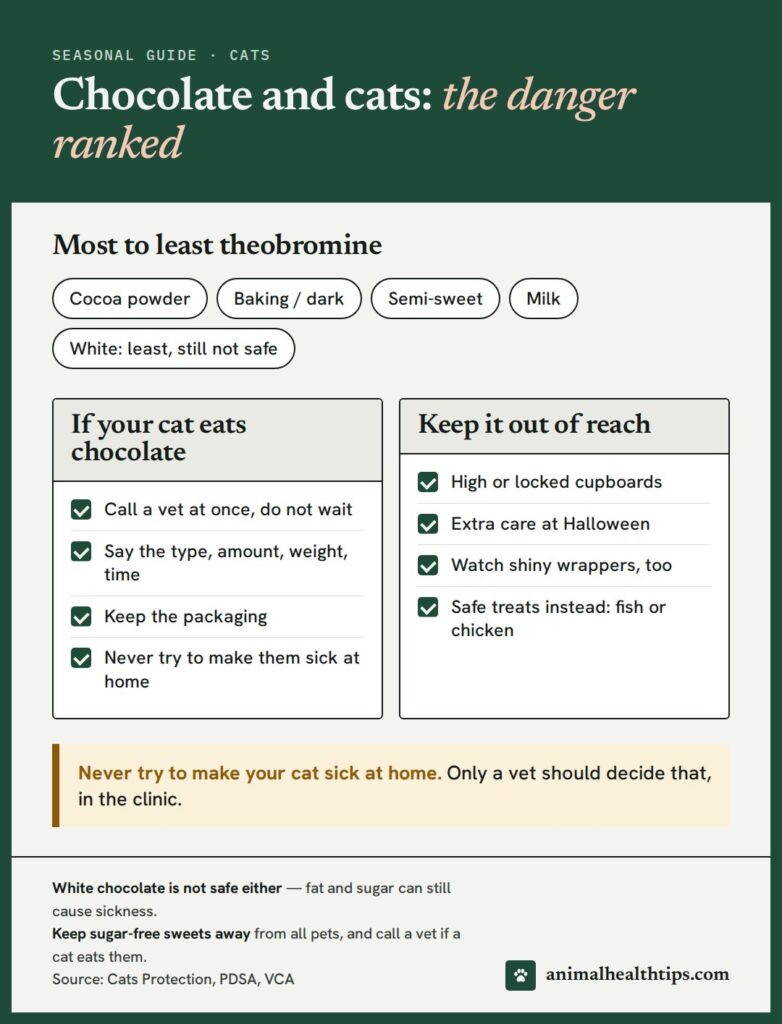
- Tell the vet the type of chocolate, how much was eaten, your cat’s weight, and when it happened. Keep the packaging.
- Never try to make your cat sick at home. Only a vet should decide that, in the clinic.
- UK: Animal PoisonLine, 01202 509000 — open 24 hours, run by the Veterinary Poisons Information Service; a fee applies.
- US: ASPCA Animal Poison Control, (888) 426-4435 — open 24 hours; a consultation fee applies.
Why is chocolate toxic to cats?
Chocolate contains theobromine, which is harmless to people but toxic to cats because cats struggle to break it down. Theobromine sits in a cat’s bloodstream for much longer than in ours and quickly builds up to dangerous levels. Chocolate also contains a small amount of caffeine, a similar compound that adds to the effect. Together they act as stimulants: they raise the heart rate and blood pressure, and increase the loss of bodily fluids.
Cats are also unlikely to be tempted by sweetness itself. Cats cannot taste sweetness: the gene for their sweet-taste receptor is an unexpressed pseudogene, so they lack the receptor needed to detect sweet tastes. Any interest a cat shows in chocolate is more likely curiosity, or attraction to its fat content, than a sweet tooth. That does not make it safe — curiosity is exactly how cats get into trouble.
Which chocolate is most dangerous?
The darker the chocolate, the more cocoa solids and theobromine it contains, and the more toxic it is. VCA Animal Hospitals ranks the types from most to least theobromine:
| Chocolate type | Theobromine level |
|---|---|
| Cocoa powder | Highest — extremely high in cocoa solids |
| Baking and dark chocolate | Very high |
| Semi-sweet chocolate | High |
| Milk chocolate | Lower, still toxic |
| White chocolate | Least — but not safe (see below) |
Cocoa powder deserves special care because it is so concentrated, and it turns up in baking, hot chocolate mixes and some garden mulches. White chocolate is a different case: PDSA says theobromine toxicity is not a risk from white chocolate, since it contains no cocoa solids, but it still contains a lot of fat and sugar, which can cause stomach upsets — and VCA adds that cats can still develop vomiting, diarrhoea or pancreatitis from the fat and sugar. White chocolate must not be presented as safe for cats.
Signs of chocolate poisoning in cats
How bad the poisoning is depends on how much chocolate the cat ate, how much the cat weighs, and the cocoa content of the chocolate. Typical signs include:
- Excitement, restlessness, agitation and hyperactivity
- Vomiting and diarrhoea
- Drinking and weeing more than usual
- Tummy pain, panting and a racing heart rate
In severe cases, chocolate toxicity can cause fast breathing, shaking and tremors, a high temperature, seizures, irregular heartbeat, heart failure, coma and even death. VCA notes that chocolate ingestion is rarely fatal but can result in significant illness. Signs may be delayed: one Cats Protection release says they can appear within 30 minutes to two hours, while PDSA says they usually appear within two to four hours but can take up to 12 hours, and can last for days. That range is exactly why you should not wait for symptoms before calling.
What to do if your cat eats chocolate
- Call your vet or a poison line immediately. Do not wait for symptoms to appear.
- Tell them the type of chocolate, how much was eaten, your cat’s weight, and when it happened. Keep the packaging — it helps the vet judge the risk.
- Never try to make your cat sick at home. VCA warns there are currently no over-the-counter products that safely induce vomiting in cats, and giving salt or hydrogen peroxide to attempt it may result in poisoning or significant injury.
- Stay with your cat and keep them indoors while you get advice and arrange the visit.
- Follow your vet’s instructions exactly, including whether to bring your cat in straight away.
What will the vet do?
Treatment depends on the dose eaten and may include decontamination, gastrointestinal support, a fluid drip, and monitoring of heart rate and blood pressure. If the cat reaches the clinic within a few hours, the vet may give an injection to make the cat sick, and may use activated charcoal; severe symptoms may need sedation and close monitoring. The sooner treatment begins, the better the prognosis. Most cats make a full recovery with the right treatment, but in severe cases chocolate poisoning can be fatal if treatment is delayed.
How to keep chocolate away from your cat
- Store all chocolate and chocolate-containing products in high or locked cupboards, out of reach — and make sure children in the house know the rule too.
- Be particularly careful at festive times. The ASPCA advises locking Halloween candy safely away, keeping pets in a room away from the front door during trick-or-treating hours, and making sure pets wear a collar with identification tags or are microchipped.
- Watch the wrappers, too. Cats love to play with shiny candy wrappers, but swallowing aluminium foil or cellophane can cause an intestinal blockage.
- Avoid garden mulches that contain cocoa shell, which PDSA lists as a chocolate risk for cats.
- Remember other seasonal dangers. Chocolate is not the only household poison cats face at this time of year — lilies, for example, are toxic to cats in every part — so keep bouquets and plants out of reach as well.
What can I give my cat instead?
If you want to give your cat a treat, Cats Protection suggests a little boiled fish or boneless chicken, or any treat specially formulated for cats. If a treat looks like chocolate, check that it is made for cats before offering it. And keep sugar-free sweets away from all pets as well: xylitol is a proven danger in dogs, and while xylitol poisoning has not been reported in cats, the safe course is to keep them away from cats too and call a vet if a cat eats them. If you are unsure about any food, check it first with our human food safety checker before sharing.
Key takeaways
- Never give chocolate to a cat — Cats Protection warns just two grams can be toxic.
- Dark, baking chocolate and cocoa powder are the most dangerous; white chocolate is not safe either.
- Call a vet at once if your cat eats any chocolate. Do not wait for symptoms.
- Never try to make your cat sick at home — only a vet should decide that, in the clinic.
Frequently asked questions
Can cats eat a little bit of chocolate?
No. Cats break down theobromine far more slowly than people do, so it builds up to dangerous levels. Cats Protection warns that just two grams is toxic, and that is a warning, not a safe amount. Any chocolate eaten is a reason to call a vet.
Is white chocolate safe for cats?
No. White chocolate contains no cocoa solids, so theobromine is not the risk, but its fat and sugar can still cause vomiting, diarrhoea or pancreatitis. Never offer white chocolate to a cat.
My cat only licked a little chocolate. Should I worry?
Yes — call your vet. How bad the poisoning is depends on the amount eaten, your cat’s weight and the cocoa content, and signs can be delayed. Tell the vet the type, the amount, your cat’s weight and when it happened.
How soon do symptoms appear?
It varies. One Cats Protection release says signs can appear within 30 minutes to two hours, while PDSA says they usually appear within two to four hours but can take up to 12 hours and last for days. Do not wait for symptoms before calling.
Can I make my cat sick at home?
No. VCA warns there are no over-the-counter products that safely induce vomiting in cats, and giving salt or hydrogen peroxide to attempt it may cause poisoning or significant injury. Only a vet should decide that, in the clinic.
What about sugar-free sweets?
Keep them away from all pets. Xylitol is a proven danger in dogs, and while xylitol poisoning has not been reported in cats, the safe course is to keep sugar-free sweets away from cats too and call a vet if a cat eats them.
Sources
- Cats Protection — Just two grams of chocolate is toxic for your cat
- PDSA — Chocolate poisoning in cats
- VCA Animal Hospitals — Chocolate poisoning in cats
- ASPCA — Top 10 toxins of 2025
- ASPCA — Taking the trick out of Howl-o-ween treats
This guide is general information, not a diagnosis. If you are worried about your pet, contact your vet.