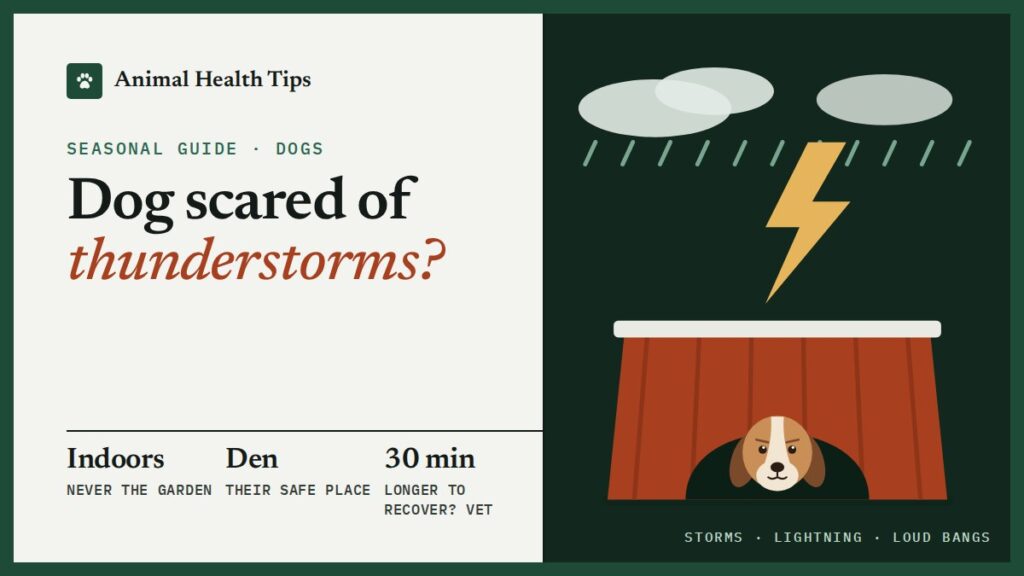
For a lot of dogs, a thunderstorm is the most frightening night of the year. The sky darkens, the air changes, and then come the sudden bangs and flashes they cannot understand or predict. Some dogs cope with a little pacing. Others panic, try to escape, or injure themselves trying. The good news is that a calm plan, set up before the storm, makes a real difference — and the earlier you start, the better it works.
In this guide8 sections
Thunderstorm phobia, also called astraphobia, is a common problem in dogs, and the ASPCA warns that a frightened dog’s reactions can put it in danger: bolting, getting lost or injured, or chewing and swallowing things when scared. Fears also tend to get worse over time. Every bad experience can make the next storm feel more terrifying, which is why acting on the earliest signs matters more than waiting for a dog to grow out of it.
Speak to your vet if
- You have tried the steps below and your dog is still very frightened
- Your dog has suddenly become afraid of storms when they were not before — pain or illness can be the cause
- Your dog takes a long time to recover after a storm: the RSPCA advises seeking help if recovery takes longer than 30 minutes
- The fear is getting worse over time, or you are thinking about calming medication
Why are dogs scared of thunder?
There is no single trigger, and most dogs react to more than one thing at once. For some dogs it is the sudden loud noise or the bright flash of lightning. For others it is the change in the weather before the storm arrives: shifts in air pressure, humidity and wind, or rainfall. Blue Cross notes that when dogs sense these changes, they may begin to take steps to find protection, before the first bang has even sounded.
Dogs are also much more sensitive to sounds than people are, and they can often detect thunder well before their owners can. The AKC describes fear of loud noises as partly instinctual — a survival drive to find shelter. Noise anxiety is very common, especially in dogs who have experienced past trauma. One trainer quoted by the AKC also believes dogs may be sensitive to static electricity, but that idea is not established, so it is not something to build a plan around.
Signs your dog is scared of storms
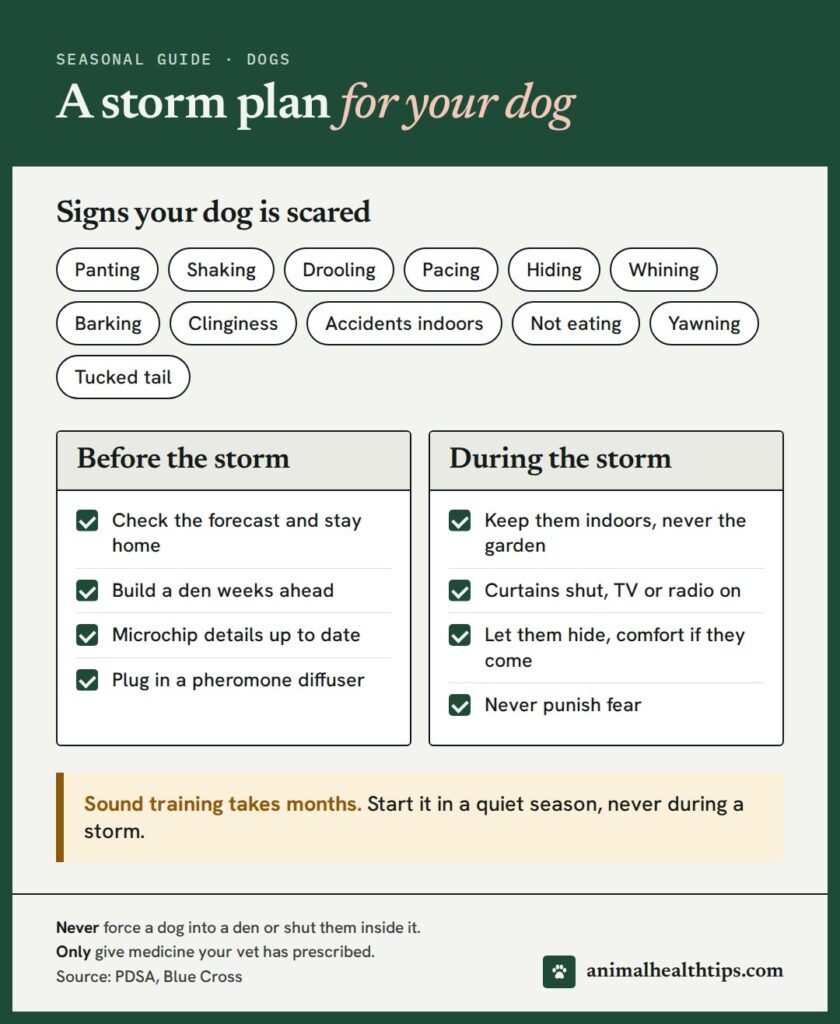
Some dogs make their fear obvious. Others show only small changes, so it helps to know what to look for:
- Panting and shaking, or drooling
- Excessive yawning, a tucked tail, or ears pinned back
- Pacing around the house, whining or barking
- Trying to hide somewhere safe, or becoming clingy
- Toileting in the house
- Becoming more destructive, chewing as they try to relieve stress
- Refusing food
- Small changes from their normal behaviour, which is all some dogs show
In a severe panic, a dog may try to escape the property, damage doors or windows, or injure itself while trying to get out. That is why the safety steps below matter as much as the calming ones.
What to do during a thunderstorm
- Keep your dog indoors. Do not put your dog in the garden during a thunderstorm, as they may try to escape. Check the home and garden for possible escape routes and block off exits.
- Shut blinds and curtains to limit the flashes of lightning, and close the windows.
- Put the TV or radio on to something soothing, like calming music or a talking station. It muffles the early sounds of a storm.
- Give your dog space indoors. Let a worried dog pace around, whine and hide in a corner if they want to. Once they have found a safe space and appear calm, try not to disturb them.
- Comfort them if they come to you. PDSA says fear is an emotion, not a behaviour, and comforting a frightened dog cannot reinforce the fear. Older veterinary guidance advised otherwise, but current UK charity advice is clear: comfort is fine.
- Stay calm yourself and act as you normally would. Your dog is more likely to get upset if you are upset. Never shout at or tell off a scared dog, even if they have been destructive or toileted indoors — telling them off will not help and can make them more stressed.
- Offer a distraction only if your dog wants one. For dogs showing only minor concern, a favourite toy, a game of fetch, a treat puzzle or a chew can take their attention off the storm. Chewing and licking are self-soothing behaviours. Do not force a dog to play.
- Hold off walks until the storm has passed. Dogs can sense the weather changing and may bolt if caught out. Make sure their microchip details are up to date, so a lost dog can be returned.
How to prepare before the next storm
- Check the weather forecast regularly and plan to stay at home with your dog when a storm is on its way.
- Build a den weeks ahead, somewhere your dog already goes when worried: behind the sofa, under a table, in a crate, or in a large, safe, empty cupboard. Drape blankets over it, add their bed, a favourite toy and some treats, and keep a bowl of water close by. Let them use it whenever they like, but never force them in, shut them inside, or pull them out.
- Try a pheromone diffuser. PDSA suggests plugging it in a few weeks before the noisy season. An anxiety shirt can also help some dogs, but only if the dog is comfortable wearing it.
- Keep their microchip details and collar tag up to date. Frightened dogs do bolt, and this is what gets them home.
- Use the same plan for fireworks. The den, the curtains and the background noise all help with fireworks fear too, as our guide to dogs scared of fireworks explains.
| When | What to do |
|---|---|
| Weeks before | Build a den, plug in a pheromone diffuser, check microchip details |
| Forecast warns of a storm | Plan to stay home; get the den, curtains and TV ready |
| During the storm | Dog indoors, curtains shut, TV or radio on, let them hide |
| After the storm | Let them settle undisturbed; watch how long recovery takes |
Can you train a dog out of storm fear?
Often, yes, but not quickly. The long-term approach is called desensitisation: you expose the dog to the feared sound at a very low level that causes no reaction, and raise it only in small amounts over several months, stepping back whenever the dog shows stress. It is paired with counterconditioning, where the sound is linked to treats until it starts to mean something good.
The dog must stay calm and happy throughout, and the work should ideally start with vet or behaviourist guidance at a time of year when storms are not likely. Never use flooding — repeated full exposure to the frightening sound — as PDSA warns it can make the dog more scared. If your dog struggles this season, use the plan above for now and start the training in a quieter season.
Puppies and storm fear
Socialisation — positively introducing a puppy to lots of experiences, including loud noises, while young — helps it learn to respond confidently as an adult. PDSA gives the socialisation period as about 4 to 12 weeks old. A puppy that has no early experiences, or a bad experience during socialisation, may develop fears and phobias later. Gentle, positive introductions to storm sounds at a low volume, with treats and play, are a far better start than a first real storm with no preparation.
When to call the vet
Most dogs can be helped with the plan above, but some need professional help. Speak to your vet if your dog is still scared despite these steps, if the fear is moderate to severe, or if it is getting worse over time. A sudden new fear deserves a check-up, because pain or illness can be behind it. The RSPCA advises seeking help if a dog takes longer than 30 minutes to recover from a storm or loud noise.
Your vet may discuss medication, but only medicine your vet has prescribed, and discussed well in advance. PDSA warns that human anti-anxiety medicines can have side effects, sometimes worsen anxiety, and some could be dangerous — never give your dog a human medicine.
Key takeaways
- Keep your dog indoors during a storm, never in the garden, and block off escape routes.
- Curtains shut, TV or radio on, and a den built weeks before the storm season.
- Comfort your dog if they come to you; never punish fear.
- Fear gets worse over time, so act on the earliest signs — and see a vet if recovery takes over 30 minutes.
Frequently asked questions
Should I comfort my dog during a thunderstorm?
Yes, if they come to you for it. PDSA says fear is an emotion, not a behaviour, so comforting a frightened dog cannot make the fear worse. Stay calm and act normally, and if your dog would rather hide alone, let them. Older veterinary guidance advised otherwise, but current UK charity advice supports comforting.
Why does my dog panic before I hear any thunder?
Dogs are much more sensitive to sounds than people and can often detect thunder before their owners can. They also sense the changes that come before a storm — shifts in air pressure, humidity and wind — and may start looking for protection before the first bang.
Is it safe to leave my dog alone during a storm?
No, if you can avoid it. Plan to stay at home when a storm is forecast, and never leave a dog in the garden during a thunderstorm, as they may try to escape. If you must go out, make sure their microchip details are up to date.
Can storm fear be cured?
Often it can be improved, but it takes months. Desensitisation pairs the storm sound at a very low volume with treats, raising the volume only in small steps. Start with vet or behaviourist guidance in a quiet season, and never use flooding, which can make fear worse.
My dog suddenly became scared of storms. Why?
A sudden new fear deserves a vet check-up, because pain or illness can be behind it. Fears also tend to worsen over time, so a dog that coped with storms last year may struggle this year. Early help stops the fear growing.
How long should it take my dog to recover after a storm?
Most dogs settle once the storm has passed and they are left undisturbed in a safe place. The RSPCA advises seeking veterinary help if your dog takes longer than 30 minutes to recover from a storm or loud noise.
Sources
- PDSA — Dogs and phobias
- Blue Cross — Dogs and thunderstorms
- ASPCA — What can you do for your pet’s storm phobia?
- PDSA — Dogs and fireworks
This guide is general information, not a diagnosis. If you are worried about your pet, contact your vet.