There is a small ritual that can save a cat’s life on a frosty morning, and it takes about ten seconds. On cold nights, cats look for warmth wherever they can find it — and a parked car, with its engine still warm from the last drive, is exactly the kind of shelter a cat will curl up in. Under the bonnet or in the wheel arches, they are hidden, quiet, and in real danger the moment the car is started.
In this guide7 sections
Go to the vet now if a cat was in the engine when it started
- A cat found in the engine compartment after the car has been started needs a vet urgently, even if it walks away.
- If you suspect a cat is inside, do not start the car — wait and let it leave on its own.
- Keep children and other pets away from an injured cat, and get it to the vet as quickly as possible.
Why cats climb into engines
Car engines generate heat, and outdoor cats are constantly seeking warmth — that is why cats seek shelter in wheel wells and engine compartments, according to Cornell’s Feline Health Center. It is part of how cats are built: the RSPCA notes that cats are descended from warm climates, their coats thicken in winter and they puff up their fur to trap warm air. But their instincts did not evolve around cars, and a warm engine can become a trap.
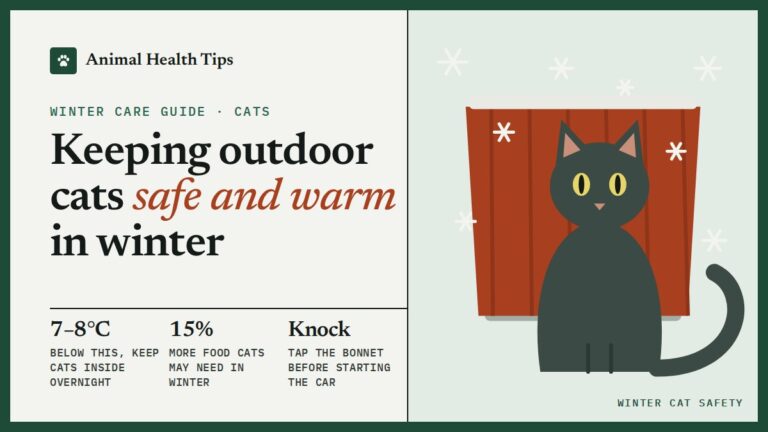
The risk is highest when it is cold. Cats Protection says anything below about 7°C can start to be unsafe for cats to stay outside for long, and the RSPCA advises keeping cats inside overnight below 7 to 8°C. When the cold keeps cats out looking for shelter, engine warmth is exactly what they find. The best protection is to keep cats indoors — but your car can just as easily shelter the neighbour’s cat or a stray.
What happens when the engine starts
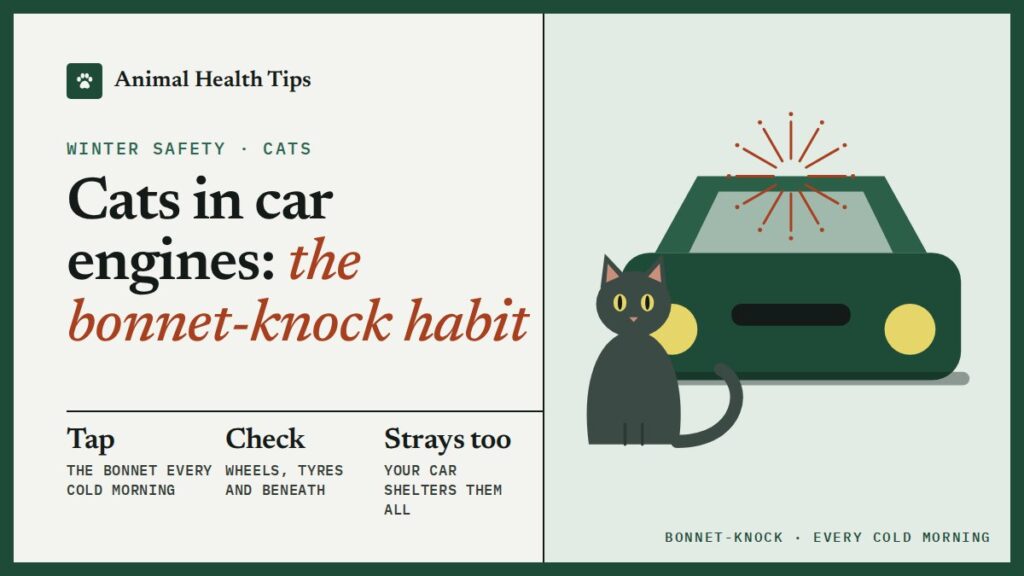
Cats can be seriously injured when owners unknowingly start their cars and drive away while a cat is sheltering in the wheel well or engine compartment. The advice from every charity is the same simple habit: bang loudly on the car bonnet before starting the engine, so any cat inside has a chance to escape. In the US it is called the hood — ASPCA’s winter tips use the same “bang loudly on the car hood” wording, so the habit travels, whatever you call the bonnet.
No approved source gives a number for how many cats are hurt this way each year, so we will not guess one. What is certain is that it is entirely preventable, and it costs nothing.
The bonnet-knock routine
Make this part of every cold-morning start, whether or not you own a cat:
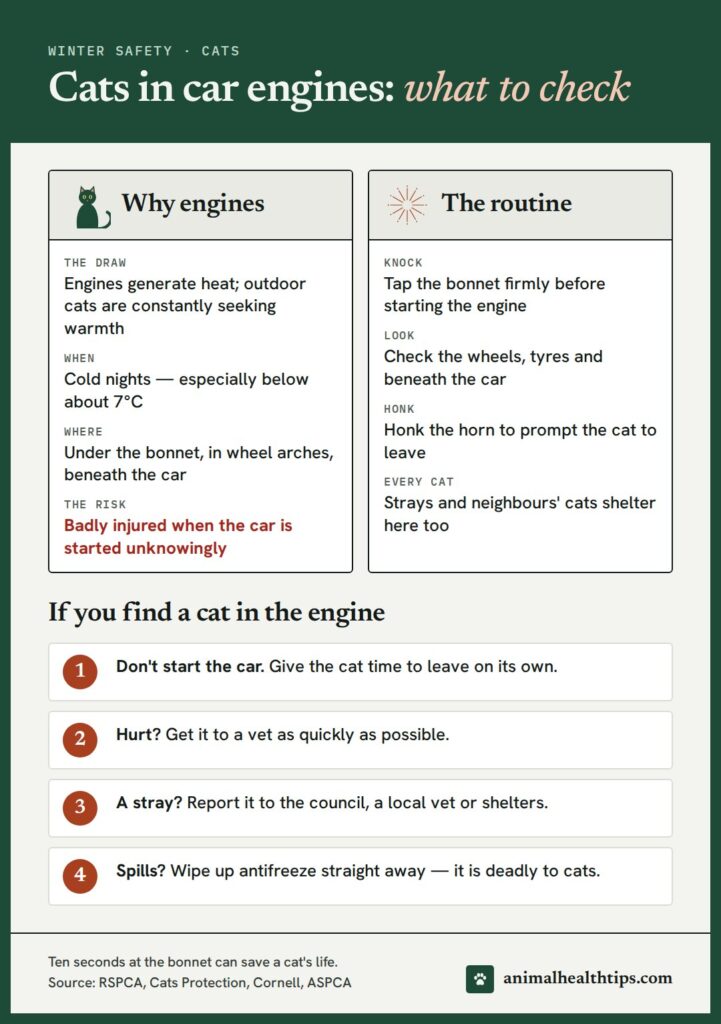
- Tap the bonnet. Give it a firm knock or two — Cats Protection and the RSPCA both advise tapping before starting.
- Pause and listen. Give the cat a moment to climb down and move clear.
- Check the wheels and tyres. Look around and between the tyres — cats tuck into wheel arches too.
- Honk the horn. Cornell’s advice is to check the wheel wells and honk or bang on the hood to prompt the cat to leave.
- Look beneath the car. The RSPCA says to always check beneath the car, the bonnet and the tyres — strays shelter there too.
Where cats hide, and how to check
| Where a cat might be | How to check it |
|---|---|
| Under the bonnet | Tap the bonnet firmly, then pause and listen for movement. |
| Wheel arches and between the tyres | Check around and between the wheels and tyres before driving. |
| Under the car | Crouch and look beneath before starting — strays shelter there too. |
| Wheel wells | Honk the horn or bang on the hood to prompt the cat to leave. |
If you find a cat in the engine
Do not start the car. Give the cat time to come out on its own — banging around under the bonnet can send it further in. If it is injured, get it to a vet as quickly as possible.
If the cat is unowned or a stray, the RSPCA advises reporting it to the council, a local vet for a microchip check, or to shelters. A scan takes minutes and may reunite a lost cat with its owner.
The other cold-weather dangers around your car
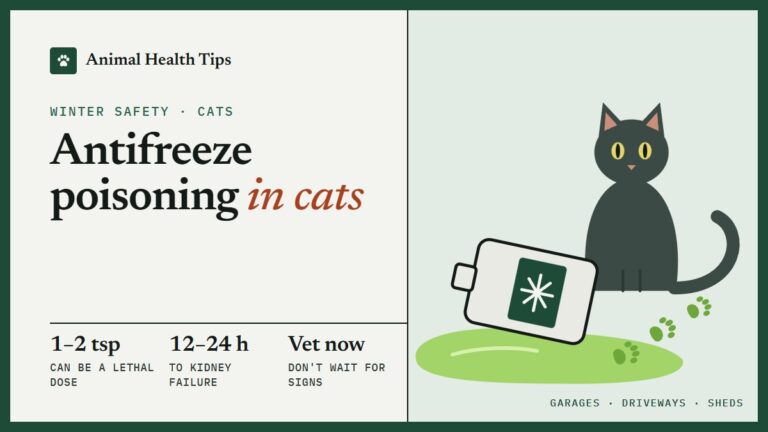
Engines are not the only hazard in the parking spot. Antifreeze is extremely toxic to cats if ingested: Cornell warns its taste is attractive to cats, and Cats Protection says ethylene glycol can be fatal, with even a few licks able to cause kidney failure. Keep it sealed and out of reach, wipe up spills and radiator leaks quickly, and consider screen wash or de-icer without ethylene glycol. For the full picture, read our guide to antifreeze poisoning in cats.
Road salt is another one: the RSPCA advises against using rock salt where cats go. And never leave pets alone in a cold car — the ASPCA warns a car acts like a refrigerator in winter, and animals can freeze to death. For shelter, food, water and frostbite care, see our full winter guide for outdoor cats.
If neighbourhood cats keep choosing your car as a parking spot, here is how to keep cats off your car.
Key takeaways
- Tap the bonnet before every cold start; check the wheels, tyres and beneath the car.
- Honk the horn too — some cats need the extra prompt.
- Never start the car if a cat is inside; an injured cat needs a vet immediately.
- Antifreeze spills are deadly to cats — wipe them up straight away.
- Cats you do not own shelter in engines too: strays and neighbours’ cats.
Frequently asked questions
Do cats really sleep in car engines?
Yes. Cornell’s Feline Health Center says engines generate heat and outdoor cats are constantly seeking warmth, which is why they shelter in wheel wells and engine compartments. Cats Protection and the RSPCA give the same warning on their winter pages.
What exactly should I do before starting my car on a cold morning?
Tap the bonnet firmly, pause and listen, check around and between the wheels and tyres, honk the horn, and look beneath the car. It takes seconds, and the RSPCA, Cats Protection, Cornell and the ASPCA all recommend versions of the same routine.
Is honking the horn enough on its own?
Not on its own. Cornell pairs honking with checking the wheel wells, and the RSPCA adds checking beneath the car, the bonnet and the tyres. Do all three: knock, look and honk.
What if a cat is stuck in the engine and won’t come out?
Do not start the car. Give it time and quiet to leave on its own. If it is injured, get it to a vet as quickly as possible. If it is a stray, report it to the council, a local vet for a microchip check, or to shelters.
I don’t have a cat. Do I still need to check?
Yes. The RSPCA says the same check applies to stray cats, and a neighbour’s cat may shelter in your car. The habit takes seconds and protects every cat in the street.
How cold is too cold for my cat?
Cats Protection says anything below about 7°C can start to be unsafe for cats to stay outside for long. The RSPCA advises keeping cats inside overnight below 7 to 8°C. Our full winter guide for outdoor cats covers shelters, food, water and frostbite care.
Sources
- RSPCA — Cold weather care for cats
- Cats Protection — Keeping cats warm and preventing hypothermia
- Cornell Feline Health Center — Cold weather tips for cats
- ASPCA — Cold weather safety tips
- ASPCA Pro — Pet preparedness tips: winter weather
This guide is general information, not a diagnosis. If you are worried about your cat, contact your vet.