Nights are drawing in and the first frosts are on their way. For a cat that spends much of its day outside, winter changes everything: the ground is cold, water bowls freeze, and warm shelter becomes a matter of comfort and, on the coldest nights, of safety. The good news is that a few simple steps make an outdoor cat’s winter far easier, and they cost very little.
In this guide7 sections
Call your vet today if you see these signs
- Shivering that stops although the cat is still cold, low energy, or loss of coordination
- Pale gums, or ears, nose and paws that feel cold to the touch
- Slow breathing or a slow heart rate, or collapse
- Pale, blue-white or blackened skin on the ears, tail tip, nose or paws — signs of frostbite
How cold is too cold for a cat?
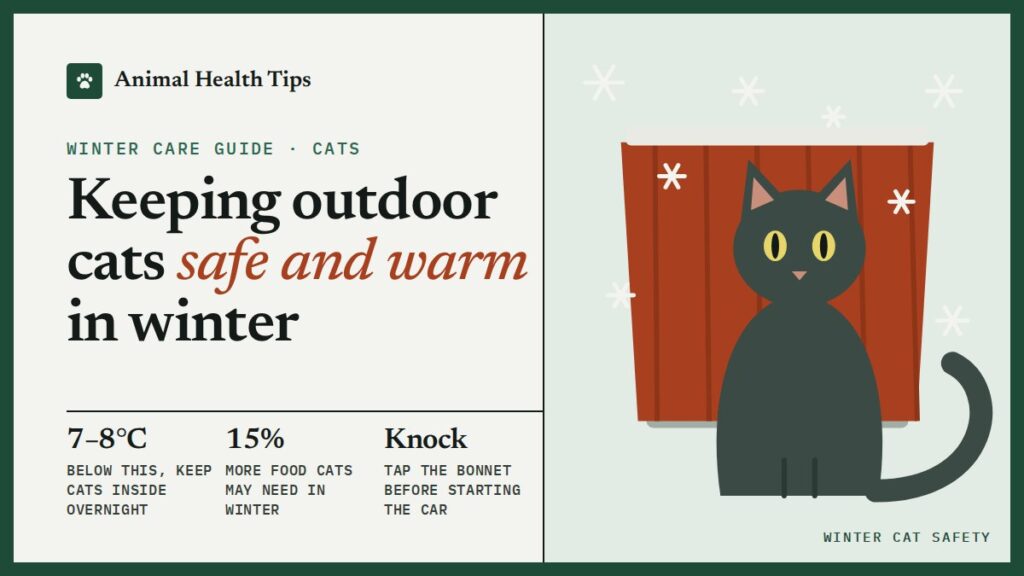
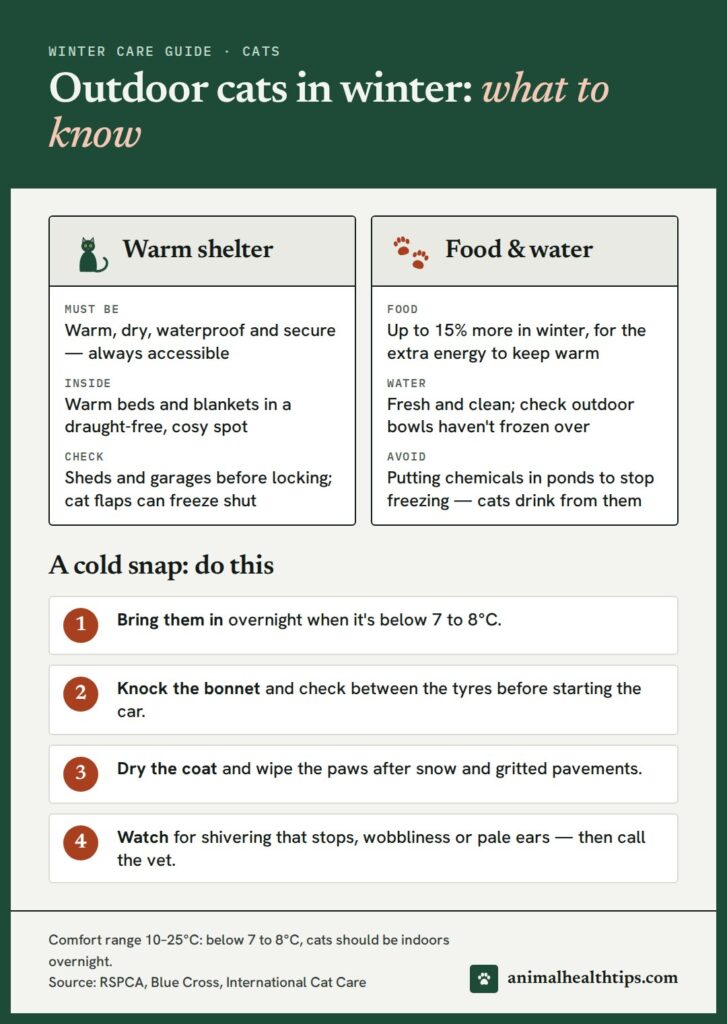
Cats feel the cold, and they can develop hypothermia and frostbite. The RSPCA puts a cat’s comfort range at 10 to 25°C, and warns that long spells below 10°C bring a risk of hypothermia, frostbite and respiratory problems. When it drops below about 7 to 8°C, the advice is to keep cats inside overnight.
Some cats are more vulnerable than others. Blue Cross highlights young and elderly cats, and hairless breeds such as the Devon rex and sphynx, which feel the cold far more than a healthy adult cat. Older cats with arthritis appreciate extra warmth too, and they should be kept inside during cold spells.
| Temperature | What to do |
|---|---|
| 10 to 25°C | A cat’s comfort range |
| Below 10°C for a long time | Risk of hypothermia and frostbite; give extra shelter and draught-free resting spots |
| Below 7 to 8°C | Keep cats inside overnight |
| Snow and ice storms | Keep cats inside; storms can disorientate them |
Give them a warm, dry place
If your cat is the outdoors type, make sure there is a warm, dry place they can always get to, such as an outdoor shelter. It should be waterproof and secure. Just as important: make sure they can get back inside the house. In icy weather a cat flap can freeze shut and block re-entry, so check it, and clear deep snow away from it.
Check sheds, garages and outbuildings before you lock them, in case a cat has slipped inside for shelter. Inside the house, offer warm beds and blankets in a draught-free, cosy spot, and put out an indoor litter tray on cold nights, even if your cat isn’t used to one. After wet or snowy weather, dry the cat off.
Food and water in winter
Cold weather is hungry work. The RSPCA says cats may eat up to 15% more food in winter to get the extra energy they need to keep warm. Keep portions generous through the cold months, but keep an eye on their weight, since many cats also exercise less in winter.
Water matters just as much. Provide fresh, clean water at all times, and if the bowl is outside, check regularly that it hasn’t frozen over. Don’t be tempted to put chemicals in ponds or water features to stop them freezing: cats drink from them, and this can be harmful, in some cases fatal, as with antifreeze.
The bonnet-knock habit
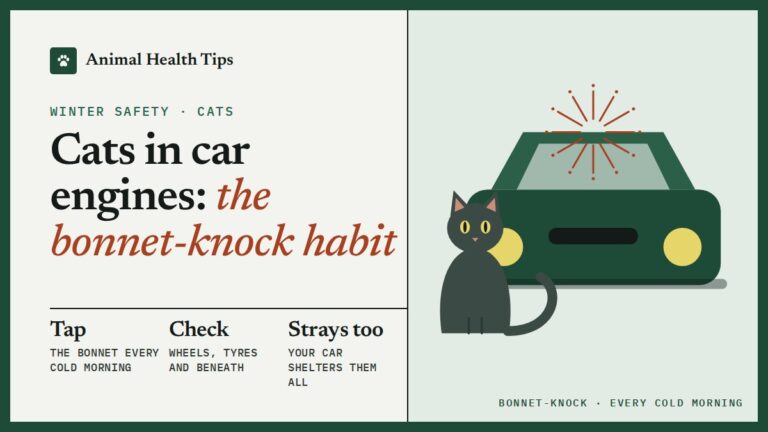
On cold nights, cats look for engine warmth. They curl up in wheel arches, between the tyres and under the bonnets of parked cars, and when the engine starts they can be seriously injured or killed. Before you start your car, always tap on the bonnet and check between the tyres. If neighbourhood cats are treating your car as a parking spot, see our guide to how to keep cats off your car.
Watch out for antifreeze and road grit
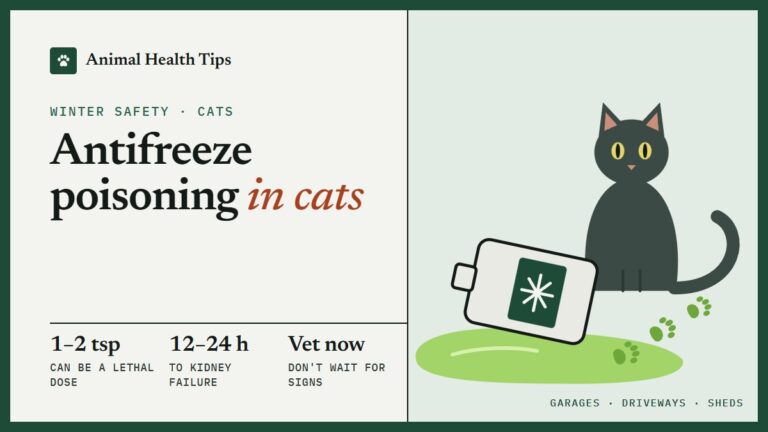
Winter’s chemical hazards are worth a moment. Antifreeze is highly poisonous to cats: even a small amount can be fatal, and cats can pick it up by licking it off their paws. Store it sealed, wipe up spills, and clean their paws when they come in. For the full picture, read our guide to antifreeze poisoning in cats.
Road salt and grit are another one: toxic to cats when eaten, and rough on paws. After gritted pavements, wipe your cat’s feet with a damp towel and check the paws for signs of injury or frostbite.
Signs your cat is too cold
If a cat has been out too long in the cold, act quickly. Bring them into the warmth and wrap them in blankets, warming them gradually. Never heat them quickly or put anything hot directly on their skin. Then call your vet, especially if the shivering has stopped, they are unsteady on their feet, or their gums are pale. Elderly, very young and hairless cats are the ones to watch most closely.
Key takeaways
- Cats are comfortable at 10 to 25°C; below 7 to 8°C they should be indoors overnight.
- An outdoor shelter should be warm, dry, waterproof and always accessible, and check cat flaps don’t freeze shut.
- Up to 15% more food in winter, and fresh water that hasn’t frozen over.
- Tap the bonnet before starting the car; cats shelter in engines.
- Shivering that stops, wobbliness and pale, cold extremities need a vet the same day.
Frequently asked questions
How cold is too cold for my cat to be outside?
The RSPCA puts a cat’s comfort range at 10 to 25°C. Long spells below 10°C carry a risk of hypothermia and frostbite, and below about 7 to 8°C cats should be kept inside overnight. Snow and ice storms are a definite stay-inside: they can disorientate cats.
Should I feed my cat more in winter?
Probably a little more. The RSPCA says cats may eat up to 15% more food in winter to get the extra energy they need to keep warm. Keep portions generous, and watch their weight, since many cats exercise less in winter and indoor life needs enrichment.
Can cats get frostbite?
Yes. Frostbite hits the extremities: ears, tail tips, nose and paws. Look for pale or blue-white skin, pain, blisters, or blackened tissue. If you see any of these, call your vet the same day, and never put anything hot directly on the affected area.
Why does my cat sleep on my car bonnet?
Engine warmth. Cats curl up under bonnets, in wheel arches and between tyres to keep warm, and they can be seriously injured or killed when the engine starts. Tap on the bonnet and check between the tyres before every cold-morning drive.
What should I check before locking the garage at night?
Look inside first. Cats slip into sheds, garages and outbuildings for shelter, and a locked door can trap them overnight in the cold. Blue Cross specifically warns to check before locking up in winter.
Do older cats need extra help in winter?
Yes. Young and elderly cats, and hairless breeds, feel the cold most. Give them warm, draught-free resting spots, keep arthritic cats warm, and bring older or unwell cats inside during cold spells rather than letting them spend nights outdoors.
Sources
- RSPCA — Cold Weather Care for Cats
- Blue Cross — Looking After Your Cat in Winter
- International Cat Care — Hazardous weather and your cat
- Cornell University College of Veterinary Medicine — CVM cold-weather tips for pet owners
This guide is general information, not a diagnosis. If you are worried about your cat, contact your vet.