Antifreeze is one of the most dangerous poisons a cat can come across, and the cold months are when it is used most. A cat does not need to drink from a bottle to be poisoned: walking through a small spill on a driveway and then grooming its paws can be enough. Acting fast is what saves cats, so it is worth knowing the signs before you ever need them.
In this guide7 sections
Go to a vet now if you think your cat has touched antifreeze
- Do not wait for symptoms. By the time they are obvious, the kidneys may already be damaged.
- If you can see antifreeze on their paws or fur, wash it off before you travel, so they can’t lick off any more.
- Take the bottle or its label with you if you can.
- UK: Animal PoisonLine, 01202 509000 — open 24 hours, run by the Veterinary Poisons Information Service; a fee applies.
- US: ASPCA Animal Poison Control, (888) 426-4435 — open 24 hours; a consultation fee applies.
Why is antifreeze so dangerous to cats?
The main ingredient in most antifreeze is ethylene glycol, a colourless, odourless liquid that tastes sweet. Cats don’t taste sweetness the way we do, but they will still drink it. Once swallowed, it is absorbed quickly and damages the kidneys, the nervous system and other organs.
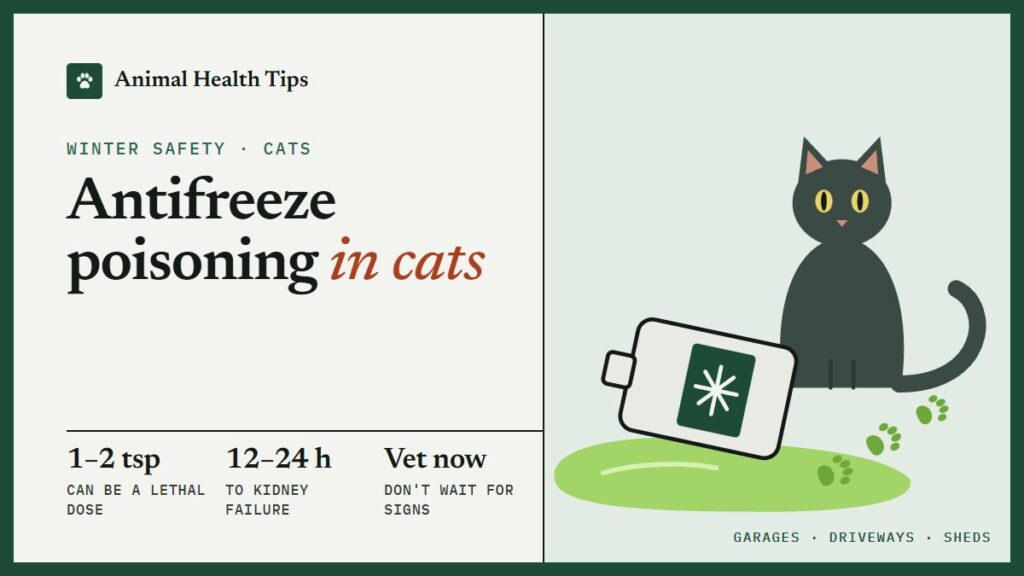
The amount needed is tiny. The Merck Veterinary Manual puts the lethal dose for a cat at one to two teaspoons, and Cats Protection warns that even the smallest amount can be fatal.
Where cats come into contact with it
Ethylene glycol is not only in the antifreeze you pour into a car. According to PDSA, it is also found in:
- Car screen wash, brake fluid and radiator fluid
- Some garden water features
- Leaky car radiators and spills on driveways or roads
- Rain water that collects in containers that once held antifreeze
Cats that roam, and stray cats looking for water, are especially at risk.
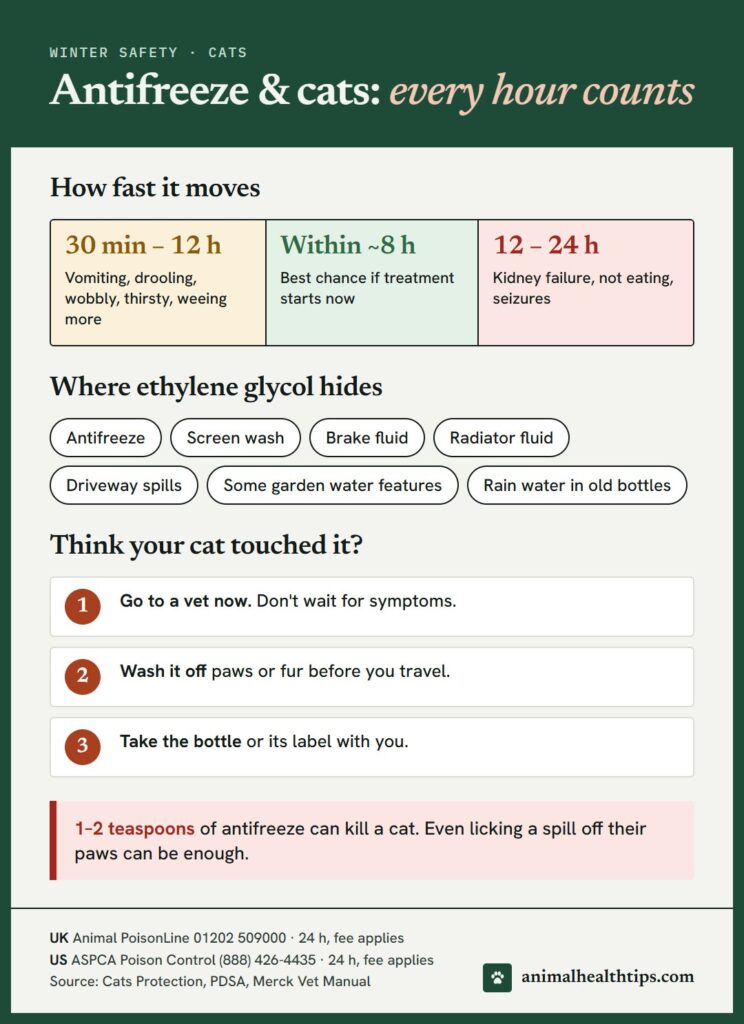
Signs of antifreeze poisoning in cats
Early signs usually appear within 30 minutes to 12 hours and can look a lot like a cat that is drunk:
- Vomiting and drooling
- Looking depressed, weak or low on energy
- Wobbliness or poor coordination
- Being very thirsty and weeing more than usual
- Fast breathing or difficulty breathing
- Seizures (fits) or collapse
Later, the cat may wee less than normal, or stop altogether. This happens as the kidneys fail.
How fast does it happen?
| Time after swallowing | What is happening |
|---|---|
| 30 minutes to 12 hours | Early signs: vomiting, drooling, wobbliness, thirst, weeing more |
| Within about 8 hours | Best chance of recovery if treatment starts now, before blood tests show kidney damage |
| 12 to 24 hours | Severe kidney failure develops in cats. Signs include not eating, lethargy and seizures. |
| After 24 hours | The kidneys may stop producing urine, and the risk of death is high |
This is why vets say a delay of even a few hours can cost a cat its life. If you are not sure whether your cat has been exposed, but they show the signs above, call your vet anyway.
How vets treat antifreeze poisoning
Your vet will ask whether your cat could have reached any antifreeze, and will usually test blood and urine. Treatment depends on how much time has passed and is likely to include:
- Medicine to make your cat sick, which only helps in the very early stages
- A specific antidote treatment to stop the antifreeze being turned into more harmful substances
- A fluid drip to support the kidneys
- Washing any antifreeze off the skin and coat
Most cats need to stay in the hospital for a few days. Treatment can be expensive, so talk openly with your vet about costs. Cats that survive can be left with long-term kidney disease.
How to keep your cat safe
- Store antifreeze, screen wash and brake fluid in sealed containers, out of reach of pets.
- Clean up any spill straight away and check your car for leaks.
- Never leave drained antifreeze in an open container, and don’t reuse old antifreeze bottles outdoors, because rain water collecting in them can poison cats. Ask your local council how to dispose of it safely.
- Consider propylene glycol antifreeze. Cats Protection says it is not completely non-toxic, but it is much safer around pets than ethylene glycol.
- Don’t rely on bittering agents. Some brands add a bitter taste, but PDSA notes this is not completely reliable.
- Scrape ice off the car by hand when you can, instead of using de-icer.
Key takeaways
- One to two teaspoons of antifreeze can kill a cat.
- Signs start within 30 minutes to 12 hours; kidney failure can follow within 12 to 24 hours.
- Go to the vet immediately. Don’t wait for symptoms.
- Store it sealed, clean up spills, and never leave it in open containers.
Frequently asked questions
How much antifreeze will kill a cat?
Very little. The Merck Veterinary Manual gives a lethal dose of one to two teaspoons for a cat, and a cat can swallow enough just by licking it off its paws after walking through a spill.
How long does it take for antifreeze to affect a cat?
Early signs usually appear within 30 minutes to 12 hours. Severe kidney failure can develop within 12 to 24 hours in cats.
Can a cat survive antifreeze poisoning?
Yes, if treatment starts very early. Cats Protection says the best chance is when treatment begins within about eight hours, before kidney damage shows on blood tests. Sadly, many cats are not treated in time, because the exposure often goes unnoticed.
Why do cats drink antifreeze?
Ethylene glycol tastes sweet. Cats don’t taste sweetness as we do, but they still drink it, especially stray or outdoor cats looking for water. Many are also poisoned by grooming it off their paws or fur.
Is screen wash dangerous to cats?
It can be. Some screen washes contain ethylene glycol, as do some brake and radiator fluids. Store all of them sealed and away from pets.
Is pet-safe antifreeze really safe?
Propylene glycol antifreeze is much safer for pets, but it is not completely non-toxic. Store it as carefully as any other car product.
Sources
- Cats Protection — Antifreeze poisoning in cats
- PDSA — Antifreeze (ethylene glycol) poisoning in cats
- Merck Veterinary Manual — Ethylene glycol (antifreeze) poisoning
- VCA Animal Hospitals — Ethylene glycol poisoning in cats
This guide is general information, not a diagnosis. If you are worried about your cat, contact your vet.