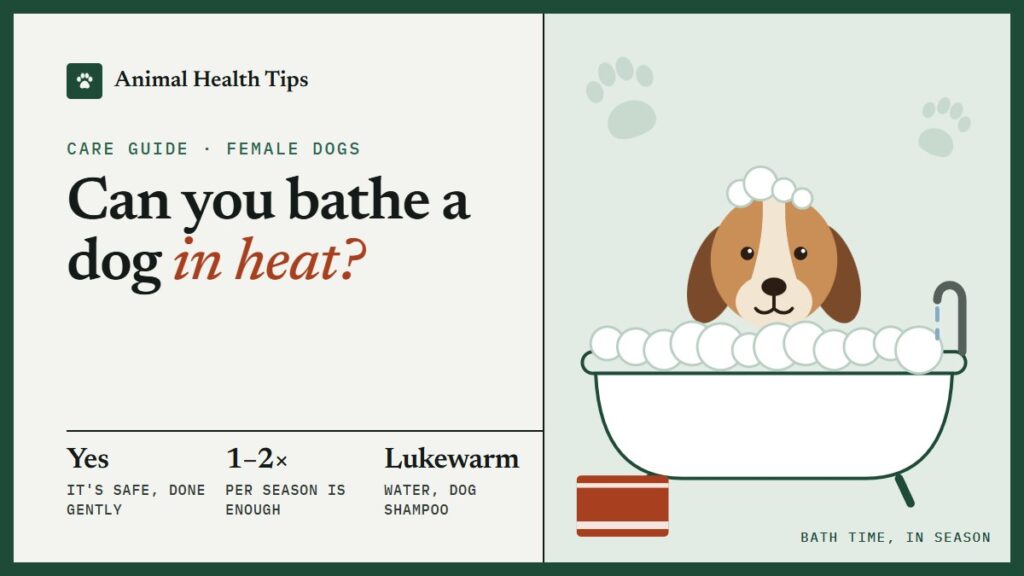
When your dog comes into season, you will probably notice spots of blood on her bed, the sofa or your floor, and it is natural to want to give her a wash. The good news is that a bath is perfectly safe while she is in heat. It just needs a little more care than usual.
In this guide5 sections
What happens when a dog is in heat?
“In heat” and “in season” mean the same thing: the part of a female dog’s cycle when she can get pregnant. According to the PDSA:
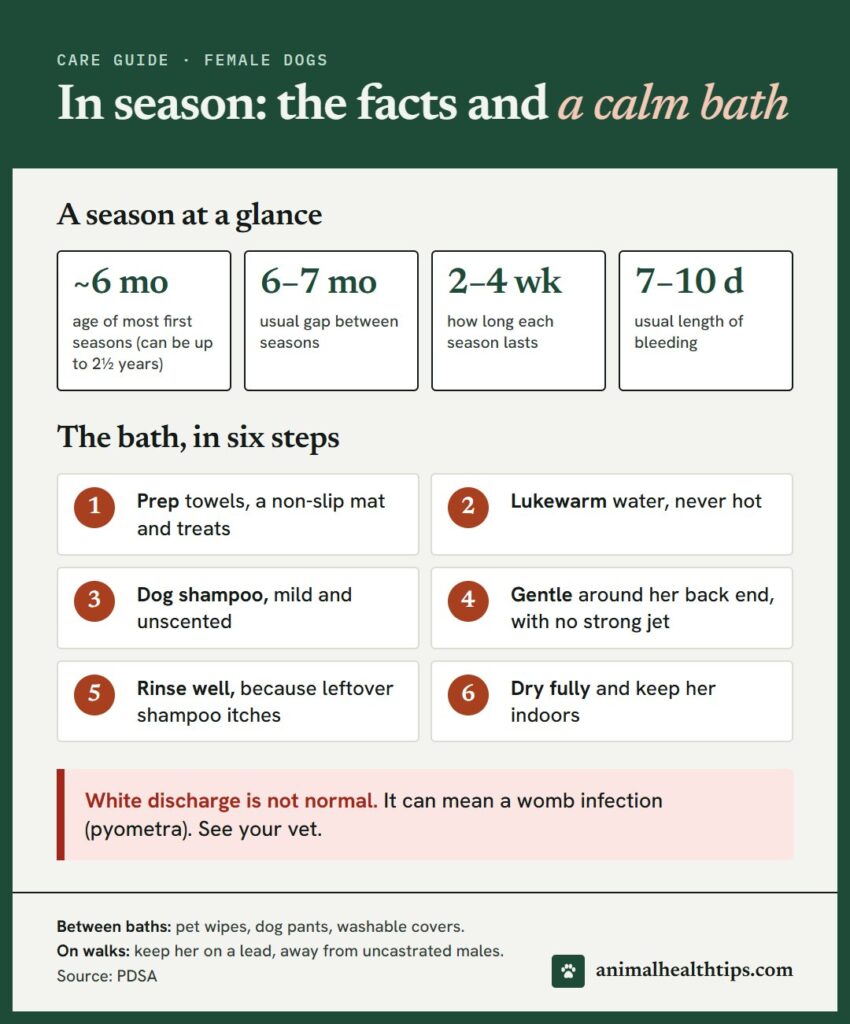
- Most dogs have their first season at around six months old, though some start as late as two and a half years.
- After that, seasons usually come every six to seven months.
- Each season lasts about two to four weeks.
- Bleeding usually lasts about a week to ten days.
- Common signs are a swollen vulva, bloody or yellow, red or brown discharge, more licking of the area, and weeing more often.
Being in season is not painful, but it can make her uncomfortable, so a bath should be calm and gentle.
Is it safe to bathe a dog in season?
Yes. There is no medical reason to avoid a bath while your dog is in heat. A warm, gentle wash can help her feel fresher and stops discharge from matting her coat. What matters is how you do it and how often.
How often: once or twice during the season is usually plenty. Shampooing more often can strip the natural oils from her skin and coat and leave it dry or itchy. For day-to-day cleaning, use a damp cloth or pet wipes instead.
How to bathe a dog in heat: 6 steps
- Get everything ready first: dog shampoo, two or three old towels, a non-slip mat for the bath or shower, and a few treats. A calm start makes the whole bath easier.
- Use lukewarm water, about the temperature you would use for a baby. Hot water can upset her skin and her mood.
- Use a dog shampoo, not your own. Human shampoo is made for human skin and can irritate a dog’s. Choose a mild, unscented one.
- Be gentle around her back end. The area is swollen and may be tender. Rinse it with your hand or a soft cloth rather than a strong jet of water, and keep shampoo on the outside only.
- Rinse well, because leftover shampoo is a common cause of itchy skin.
- Dry her thoroughly with towels, then let her settle somewhere warm. If she is used to a hairdryer, keep it on a low, cool setting.
| Do | Avoid |
|---|---|
| Lukewarm water and a mild dog shampoo | Hot water, human shampoo or strongly scented products |
| A soft cloth or cupped hand around her back end | A strong jet of water or scrubbing the vulva |
| Once or twice during her season | Shampooing every few days |
| Drying her fully and keeping her indoors afterwards | Letting her outside wet or unsupervised |
Keeping her clean between baths
- Dog pants or season knickers with a washable or disposable pad catch most of the discharge. Take them off regularly so she can go to the toilet and her skin can breathe.
- Cover her bed and favourite spots with old towels or throws you can wash.
- Pet wipes or a damp cloth are enough to clean her back end once or twice a day.
- She will lick herself clean too. This is normal while she is in season.
A bath freshens her coat, but it will not stop male dogs being interested in her. Throughout her season, walk her on a lead, keep her away from uncastrated males, and do not leave her alone in the garden.
See your vet if
- You notice white discharge. This is not part of a normal season and can be a sign of a womb infection called pyometra, which needs urgent treatment.
- She seems unwell during or after her season, for example if she is very quiet, off her food, or drinking much more than usual.
- Bleeding goes on well beyond the usual week to ten days, or a season seems to last much longer than four weeks.
If you do not plan to breed from her, spaying stops seasons altogether. Your vet can advise on the best timing for your dog.
Key takeaways
- Bathing a dog in heat is safe. Use lukewarm water and a dog shampoo, and be gentle.
- Once or twice per season is enough; use wipes in between.
- Dog pants and washable covers save your furniture.
- White discharge is not normal. See your vet.
Frequently asked questions
Can I give my dog a bath while she is on her period?
Yes. A dog’s “period” is her season, and a gentle bath with lukewarm water and dog shampoo is safe. Keep it to once or twice during the season.
How often should I bathe my dog in heat?
Once or twice during the whole season is usually enough. For daily cleaning, use pet wipes or a damp cloth, because frequent shampooing can dry out her skin.
Can I use human shampoo or baby wipes on my dog?
Use products made for dogs. Human shampoo is made for human skin and can irritate a dog’s. Unscented pet wipes are the safest choice between baths.
How long does a dog stay in heat?
Usually two to four weeks, with bleeding lasting about a week to ten days. Most dogs come into season every six to seven months.
Is it painful for a dog to be in heat?
Being in season is not painful, but it can be uncomfortable. That is why gentle handling around her back end matters during a bath.
Will a bath stop male dogs from smelling her?
No. A bath freshens her coat, but males will still be interested for as long as she is in season. Keep her on a lead and away from uncastrated males.
Sources
- PDSA — Seasons (heat) in dogs
This guide is general information, not a diagnosis. If you are worried about your dog, contact your vet.