Dogs are known for their unconditional love and loyalty, but also for their habit of licking their humans. Whether it’s your face, your hands, or your feet, your dog probably enjoys giving you a wet kiss from time to time. But why do dogs lick you? What does it mean when your dog licks you? And is it healthy or harmful for you and your dog?
In this guide6 sections
In this article, we will explore the science behind this adorable behavior and answer some of the most common questions about dog licking. We will also give you some tips on how to deal with excessive licking and how to train your dog to lick less or more appropriately.
Why Do Dogs Lick You? The Main Reasons
Dogs lick you for various reasons, depending on the context and the individual dog. Here are some of the main reasons why dogs lick you:
To Show Affection
One of the most obvious reasons why dogs lick you is to show affection. Dogs are social animals that crave physical contact and bonding with their pack members. Licking is one of the ways dogs express their love and attachment to their humans. It’s also a way of reinforcing their social bonds and hierarchy. When your dog licks you, he or she is saying “I love you, you are my leader, and I respect you”.
Licking is also a way of releasing endorphins, the feel-good hormones that make dogs happy and relaxed. When your dog licks you, he or she is also feeling good and enjoying the moment with you.
To Seek Attention
Another reason why dogs lick you is to seek attention. Dogs are smart and they learn quickly what works and what doesn’t to get your attention. If you respond positively to your dog’s licking, such as by petting, praising, or playing with him or her, your dog will learn that licking is a good way to get what he or she wants. On the other hand, if you ignore or scold your dog for licking, your dog will learn that licking is not a good way to get your attention.
Some dogs may lick you more when they are bored, lonely, or anxious, as a way of coping with their emotions and getting your attention. If you suspect that your dog is licking you for attention, you should try to provide more mental and physical stimulation for your dog, such as by playing, training, or exercising with him or her. You should also avoid rewarding your dog’s licking with attention, and instead redirect your dog to a more appropriate behavior, such as sitting or lying down.
To Communicate
Dogs also lick you to communicate something to you. Dogs have a limited vocabulary, so they rely on body language, vocalizations, and licking to convey their messages. For example, your dog may lick you to greet you, to apologize, to ask for something, to show submission, or to express curiosity.
Dogs also lick you to gather information about you. Dogs have a highly developed sense of smell and taste, and they can learn a lot about you by licking you. For example, they can tell if you are sick, stressed, happy, or sad by licking you. They can also recognize your scent and taste, and use licking as a way of identifying you and confirming that you are their human.
To Explore
Dogs are curious creatures, and they use their mouths to explore the world. Licking is one of the ways dogs learn about new things, such as objects, animals, or people. When your dog licks you, he or she is trying to figure out who you are, what you are doing, and what you taste like. Licking is also a way of stimulating their senses and satisfying their natural instincts.
Some dogs may lick you more than others, depending on their personality, breed, and upbringing. For example, some breeds, such as retrievers, spaniels, and hounds, are more prone to licking, because they were bred to use their mouths for hunting and retrieving. Some dogs may also lick you more if they were weaned too early or too late, or if they were licked a lot by their mother or littermates.
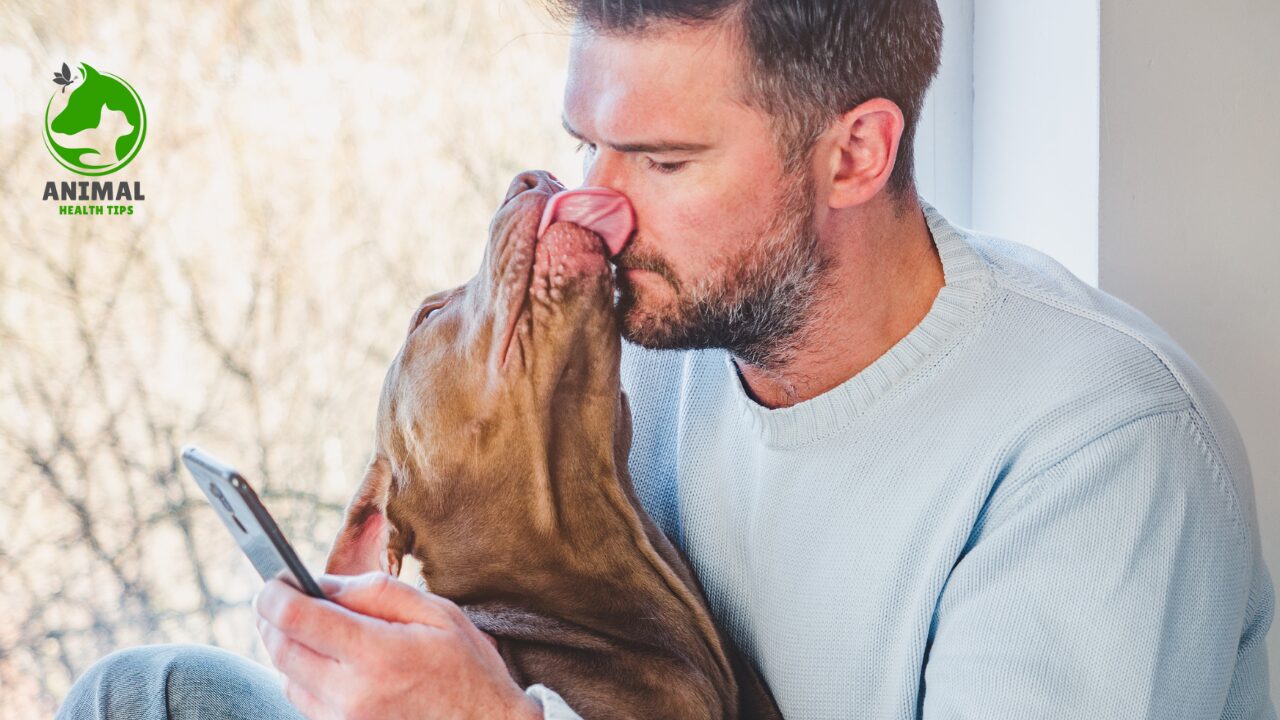
Is It Healthy or Harmful for You and Your Dog?
Licking is a natural and normal behavior for dogs, and it can have many benefits for both you and your dog. For example, licking can:
- Strengthen your bond with your dog and make you both happier and healthier
- Reduce your stress and blood pressure and boost your immune system
- Clean your wounds and prevent infections
- Keep your dog’s mouth and teeth healthy and prevent bad breath
However, licking can also have some drawbacks, such as:
- Transmitting bacteria, viruses, parasites, or allergens from your dog’s mouth to your skin or mucous membranes
- Irritating your skin or causing rashes, infections, or allergies
- Damaging your dog’s teeth or gums or causing dental problems
- Reinforcing unwanted behaviors or creating bad habits
To minimize the risks and maximize the benefits of licking, you should:
- Keep your dog’s vaccinations and deworming up to date and check your dog regularly for fleas, ticks, or other parasites
- Wash your hands and face after your dog licks you and avoid letting your dog lick your mouth, nose, eyes, or open wounds
- Consult your doctor if you have a compromised immune system, a serious medical condition, or an allergy to dogs
- Consult your veterinarian if your dog has a dental problem, a mouth injury, or a bad breath
- Monitor your dog’s licking and discourage excessive or inappropriate licking

How to Deal with Excessive or Inappropriate Licking
While licking is a normal and natural behavior for dogs, it can become a problem if it is excessive or inappropriate. For example, your dog may lick you too much, too hard, or in the wrong places, such as your face, your clothes, or your furniture. This can be annoying, uncomfortable, or even dangerous for you and your dog.
If your dog licks you excessively or inappropriately, you should try to find out the reason behind it and address it accordingly. Here are some possible causes and solutions for excessive or inappropriate licking:
Medical issues:
Your dog may lick you excessively or inappropriately if he or she has a medical issue, such as a skin infection, a dental problem, a digestive disorder, or a neurological condition. If you notice any signs of illness or injury in your dog, such as scratching, chewing, drooling, vomiting, diarrhea, or seizures, you should take your dog to the veterinarian as soon as possible.
Behavioral issues:
Your dog may lick you excessively or inappropriately if he or she has a behavioral issue, such as anxiety, boredom, stress, or compulsive disorder. If you notice any signs of emotional distress or abnormal behavior in your dog, such as whining, barking, pacing, hiding, or destroying things, you should consult a professional dog trainer or behaviorist.
Environmental factors:
Your dog may lick you excessively or inappropriately if he or she is influenced by environmental factors, such as the weather, the season, the diet, or the presence of other animals or people. If you notice any changes in your dog’s licking habits, you should try to identify and eliminate or reduce the triggers that may cause your dog to lick more or less.
Training issues:
Your dog may lick you excessively or inappropriately if he or she has not been trained properly or consistently. If you want to teach your dog to lick less or more appropriately, you should use positive reinforcement and clear communication. You should reward your dog for licking gently and in the right places, and ignore or redirect your dog for licking too much, too hard, or in the wrong places. You should also teach your dog a cue, such as “stop” or “enough”, to signal when you want your dog to stop licking.

Frequently Asked Questions
Here are some of the most frequently asked questions about dog licking and their answers:
Q: Why does my dog lick my face?
A: Your dog may lick your face to show affection, to greet you, to apologize, to seek attention, to communicate, or to explore. Your dog may also lick your face to taste the food or the sweat on your skin.
Q: Why does my dog lick my feet?
A: Your dog may lick your feet to show affection, to seek attention, to communicate, or to explore. Your dog may also lick your feet to taste the salt or the dirt on your skin.
Q: Why does my dog lick my hands?
A: Your dog may lick your hands to show affection, to seek attention, to communicate, or to explore. Your dog may also lick your hands to taste the food or the lotion on your skin.
Q: Why does my dog lick the air?
A: Your dog may lick the air to show excitement, to express curiosity, to relieve stress, or to cope with nausea. Your dog may also lick the air to taste the smells or the flavors in the air.
Q: Why does my dog lick the couch?
A: Your dog may lick the couch to show affection, to seek attention, to communicate, or to explore. Your dog may also lick the couch to taste the food or the scent on the fabric.
Q: Why does my dog lick himself or herself?
A: Your dog may lick himself or herself to groom, to heal, to soothe, or to stimulate. Your dog may also lick himself or herself to cope with boredom, anxiety, stress, or compulsive disorder.
Conclusion
Licking is a natural and normal behavior for dogs, and it can have many meanings and benefits for both you and your dog. However, it can also become a problem if it is excessive or inappropriate. To understand why your dog licks you and how to deal with it, you should consider the context, the individual dog, and the possible causes and solutions. By doing so, you can enjoy a healthy and happy relationship with your dog and his or her licking habits.
Note:
So in This Post We Tell You, Why Do Dogs Lick You? what points can you think of/have experienced? Let me know in the comments.
If you found this helpful feel free to share your experience if you can relate to these points and if you are comfortable to share
For More Articles Related to Dogs Health Stay Tuned To our Site